
Does Breastfeeding Cause Vaginal Dryness? Your Comprehensive Guide and Practical Solutions
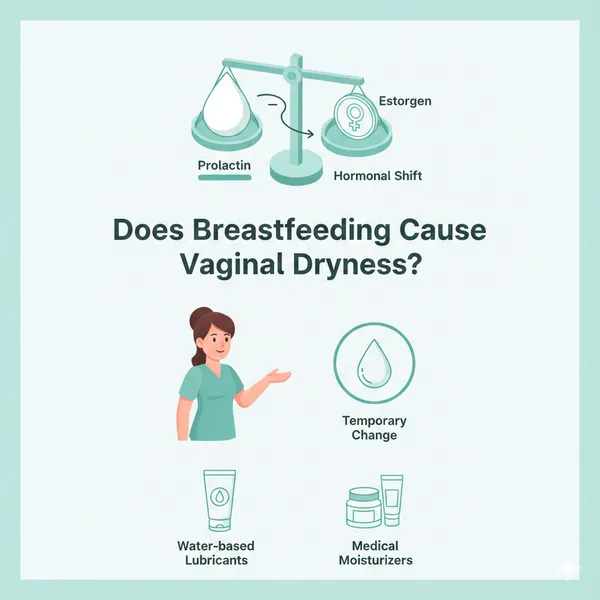
Yes, breastfeeding causes temporary vaginal dryness. This is completely normal and results from hormonal changes in your body to serve your baby’s needs.
Elevated “Prolactin” (milk hormone) levels automatically lead to a decrease in “Estrogen,” the hormone responsible for vaginal lubrication.
This dryness is temporary and not a sign of illness. It will gradually resolve after reducing breastfeeding frequency or weaning.
Using water-based lubricants and safe medical moisturizers resolves the issue effectively.
🎯 The Direct and Simple Answer: Why Do You Feel Dry During Breastfeeding?
Summary of the Clear Answer
The short answer is: Yes, breastfeeding is a direct and very common cause of vaginal dryness. The hormones your body produces to manufacture milk temporarily “switch off” the hormones responsible for lubricating and softening the vaginal area.
Think of it this way: Imagine your body has a primary “power station.” When you start breastfeeding, your body directs all “electricity” and resources to the “milk factory” to nourish your child. To conserve this energy, the body shuts down the “cooling and lubrication system” (estrogen) in other areas like the vagina. This means the dryness you feel is not a flaw in your body, but a sign that your body is focusing all its strength on the sacred task of feeding your baby.
From a medical perspective, when your baby nurses, a hormone called “Prolactin” rises. This hormone is the “arch-enemy” of “Estrogen.” Estrogen makes vaginal tissues elastic, thick, and naturally moist. When estrogen drops due to breastfeeding, the vaginal walls become thin, less elastic, and very dry, which can cause burning, itching, or significant pain during intimacy.
Breastfeeding mothers experience a state similar to “temporary menopause.” Just as women in menopause suffer from dryness, nursing mothers experience it for the same reason: estrogen deficiency. However, the fundamental difference is that your condition is “temporary and reversible.” It will return to normal once your baby starts relying on solid food and nursing sessions decrease, or upon total weaning and the return of a regular menstrual cycle.
In short, vaginal dryness is a small “tax” the tissues pay in exchange for the body’s dedication to breastfeeding. There is no need to worry or feel that you have lost your femininity; solutions are available and easy, and the situation will revert to its previous state once this beautiful stage of your child’s life ends.
What Happens to Vaginal Tissue in Detail?
The absence of estrogen leads to three major changes in the vaginal area:
- 1. Wall Thinning (Atrophy) Instead of the vaginal walls being thick and cushioned, they become very thin and sensitive. This makes them prone to minor abrasions or inflammation during friction, which explains the pain you may feel.
- 2. pH Balance Changes Natural vaginal secretions protect the area from bacteria and fungi. Dryness alters the pH level, making breastfeeding mothers more susceptible to urinary tract infections (UTIs) or recurrent yeast infections.
- 3. Loss of Elasticity The vagina loses its ability to stretch quickly and comfortably as it did before. This means the area requires more time for “foreplay” and stimulation before intimacy to compensate for the hormonal deficit.
Advanced Questions on Vaginal Dryness and Breastfeeding
1. When does vaginal dryness actually start to improve?
Noticeable improvement begins when your baby starts eating solid food (after 6 months) and breastfeeding frequency decreases, allowing estrogen levels to rise gradually. Complete recovery usually occurs 1–2 months after final weaning or when your menstrual cycle returns to normal, which is a sign that the “hormone factory” is back at full capacity.
2. Can I use “Vaseline” as a solution for dryness?
It is strictly not recommended to use Vaseline or any mineral oils. Vaseline is a heavy substance that can clog pores and disrupt the balance of healthy bacteria in the vagina, leading to infections. It can also damage latex condoms if you are using them for birth control. It is always better to use water-based lubricants because they mimic natural body secretions and are easy to clean.
3. What is the difference between a “lubricant” and a “vaginal moisturizer,” and which is better?
Lubricants are used “in the moment” during intimacy to reduce friction and pain. A vaginal moisturizer is a treatment used every 2–3 days (like a face moisturizer) to be absorbed into the tissues, keeping them supple and healthy all the time. If dryness bothers you throughout the day, a moisturizer is the solution; if it only bothers you during intercourse, a lubricant is sufficient.
4. Does vaginal dryness reduce libido?
Yes, indirectly. The mind associates intimacy with the pain caused by dryness, leading to an automatic aversion. Additionally, the hormone prolactin itself reduces desire. The solution is honesty with your partner, using lubricants, and allowing more time for foreplay. Remember, this is a psychological and hormonal state, not a personal failing.
5. Are estrogen-based creams safe during breastfeeding?
In cases of severe dryness that do not respond to lubricants, a doctor may prescribe “topical” estrogen cream (applied only inside the vagina). The amount of hormone that reaches the breast milk from topical cream is very minimal and generally considered safe, but it must be used under full medical supervision to ensure it doesn’t affect milk supply.
6. Can I use natural oils like “olive oil” for moisturizing?
Although natural, oils can cause an imbalance in the delicate vaginal environment and may trigger fungal growth in some women. They are also difficult to wash off and can stain clothing. It is always preferable to use medical products specifically designed for the vagina (water-based) as they are tested to match the area’s pH.
7. Does dryness increase the likelihood of UTIs?
Yes, significantly. Estrogen deficiency reduces the number of healthy bacteria (Lactobacillus) that protect the vagina and urethra from harmful germs. This allows bacteria to migrate easily to the bladder. Therefore, it is crucial to drink plenty of water and urinate immediately after intimacy to flush out any bacteria.
8. Does the type of wash I use affect dryness?
Absolutely. Ordinary soap or strong vaginal washes containing fragrances increase the dryness and irritation of an already delicate area. The golden rule: wash the external area only with warm water and avoid any chemicals inside the vagina; your body cleanses itself internally.
9. Does taking “Omega-3” help reduce vaginal dryness?
Some studies suggest that healthy fats like Omega-3 (found in fish and flaxseeds) help hydrate mucous membranes throughout the body, including the vagina. Vitamin E may also help. Proper nutrition supports overall health, but it won’t fully compensate for the hormonal drop caused by breastfeeding, so topical moisturizers remain the fastest solution.
10. How do I know if the pain is from dryness or from “postpartum stitches”?
Pain from stitches is usually at a specific spot (the vaginal opening) and gradually decreases over time. Dryness pain feels like a “burning” or “stinging” throughout the entire vaginal canal and worsens as breastfeeding continues. If you try a water-based lubricant and the pain disappears, that is definitive proof that dryness is the cause.
Golden Tips for Nursing Mothers to Manage Dryness
- Choose the Right Lubricant: Look for “Water-based” and glycerin-free/paraben-free labels to avoid irritation.
- Consistent Hydration: Drink at least 2 liters of water daily; your body loses significant fluids during milk production.
- Communication with Your Partner: Explain that this dryness is a temporary hormonal effect unrelated to your feelings for him; understanding reduces psychological pressure.
- Avoid Tight Clothing: Wear loose cotton underwear to allow the area to “breathe” and reduce irritation from friction.

Dr. Ahmad Baker, PharmD
Senior Pharmacist & Health Educator
With over 23 years of clinical experience in hospital and community pharmacy across Egypt and Saudi Arabia, Dr. Ahmad specializes in reproductive health and pharmaceutical safety. He is dedicated to providing evidence-based guidance to empower patients in the MENA region.
Medical Disclaimer: This content is for educational purposes and reflects the latest pharmaceutical protocols. It is not a substitute for personal medical advice. Always consult Dr. Ahmad Baker or your healthcare provider before starting any treatment.