
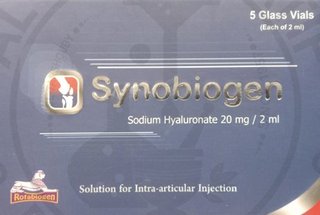
Synobiogen 20 mg/2 ml
A comprehensive guide to Synobiogen injections (Sodium Hyaluronate) used as a treatment for osteoarthritis to lubricate the joint and relieve pain.
Quick Facts
Definition and Uses
Synobiogen is a sterile solution for intra-articular injection, containing Sodium Hyaluronate, a natural substance similar to the synovial fluid found in healthy joints. This fluid acts as a “lubricant” and shock absorber within the joint. In cases of osteoarthritis, the quality and quantity of this fluid decrease, leading to increased friction and pain. Synobiogen injections aim to supplement this deficiency.
- Relieves pain and improves joint function in cases of osteoarthritis of the knee, hip, and other joints.
- Used for patients who have not responded adequately to simple pain relievers or physical therapy.
- Works to lubricate the joint, reduce friction, and absorb shock during movement.
- May also have an anti-inflammatory effect and help protect the remaining cartilage.
How to Use and Dosage
Synobiogen injections must be administered by a qualified physician (such as an orthopedist or rheumatologist) in a sterile medical setting. The patient should not self-inject. The dosage and number of injections depend on the affected joint, the severity of the condition, and the doctor’s recommendation. The procedure is relatively simple and is performed in the doctor’s office.
- The doctor sterilizes the skin over the joint area to be injected.
- The doctor may use a local anesthetic to numb the area and reduce pain.
- A needle is inserted into the joint space, and the contents of the vial (2 ml) are injected.
- Treatment typically involves a course of 3 to 5 injections, given at a rate of one injection per week.
Side Effects
Most side effects of Synobiogen injections are local and temporary, occurring at the injection site. Serious systemic reactions are rare. These symptoms usually resolve on their own within a few days and can be managed with rest and cold packs.
- Common: Pain, swelling, redness, or a feeling of warmth in the injected joint.
- Fluid accumulation in the joint (joint effusion) or temporary stiffness.
- Minor bruising may occur at the injection site.
- Rare: Allergic reactions, or joint infection (a serious condition requiring immediate medical attention).
Warnings and Precautions
To ensure the safety and effectiveness of the treatment, there are important precautions to consider. It is crucial that the procedure is performed under strictly sterile conditions to minimize the risk of infection. You should inform your doctor of any health conditions you have before undergoing the injection.
- The injection should not be given if there is an infection in the joint or in the skin around the injection site.
- It should be avoided in patients with a known allergy to Sodium Hyaluronate products.
- After the injection, the patient is advised to avoid strenuous activities such as running or heavy lifting for 48 hours.
- The safety and efficacy of these injections have not been established in pregnant or breastfeeding women or children.
Frequently Asked Questions
How long does the effect of a Synobiogen injection last?
The effect of the injections varies from person to person, but in general, they can provide pain relief and improved joint function for up to 6 months or more after completing a full course of treatment (usually 3-5 injections). Improvement begins gradually during the treatment period, which lasts several weeks.
The course of injections can be repeated every 6 to 12 months depending on the patient’s response and the doctor’s recommendation. The goal is to provide a long period of comfort and reduce the need for oral pain relievers.
Is the injection procedure painful?
The patient may feel some discomfort or pressure during the injection, but it is usually tolerable. Most doctors use a numbing spray or a small injection of local anesthetic (like lidocaine) to numb the skin and area before inserting the main needle, making the procedure more comfortable.
After the injection, it is normal to feel some mild pain or swelling in the joint for a few days. Applying cold packs to the joint for 15-20 minutes several times a day and taking simple pain relievers can help alleviate this discomfort.
What should I do after getting the injection?
It is important to follow your doctor’s instructions after the injection. Generally, it is recommended to rest the joint and avoid strenuous or weight-bearing activities, such as running, jumping, or intense sports, for 24 to 48 hours. This allows the injected substance to settle in the joint and reduces the risk of temporary inflammation.
You can perform your normal daily activities like light walking. If you experience pain or swelling, use cold packs and take over-the-counter pain relievers as recommended by your doctor. Contact your doctor if the pain is severe or lasts for more than a few days.
What is the difference between hyaluronic acid and cortisone injections?
The two treatments work in completely different ways. Cortisone injections are powerful anti-inflammatory steroid injections that provide rapid pain relief by significantly reducing inflammation, but their effect is often short-term (weeks to a few months) and may harm cartilage with repeated use. Cortisone does not improve the quality of the synovial fluid.
Hyaluronic acid injections (like Synobiogen) aim to improve the joint environment by restoring the lubricating and shock-absorbing properties of the synovial fluid. Their effect is slower to appear but may last longer (several months) and is considered safer for the joint structure in the long run.
Does Synobiogen provide a definitive cure for osteoarthritis?
No, Synobiogen injections are not a cure for osteoarthritis. Osteoarthritis is a chronic degenerative disease, and to date, there is no treatment that can completely reverse cartilage wear. The goal of these injections is to effectively manage symptoms, reduce pain, and improve the patient’s mobility and quality of life.
The treatment is part of a comprehensive management plan for osteoarthritis that also includes weight management, appropriate muscle-strengthening exercises, physical therapy, and the use of other medications as needed. These injections can help delay the need for major interventions like joint replacement surgery.
Can these injections be used in joints other than the knee?
Yes, although the knee joint is the most common for study and treatment with hyaluronic acid injections, they can be used in other joints affected by osteoarthritis. Other uses include the hip, shoulder, ankle, and even the small joints of the hands and feet. Injecting deep joints like the hip usually requires imaging guidance (such as ultrasound) to ensure accuracy.
The decision to use the injections in a specific joint depends on the doctor’s assessment of your condition. The doctor will determine if this treatment is appropriate for the affected joint and whether the expected benefits outweigh any potential risks of the procedure.
When should I call the doctor after the injection?
It is normal to feel some mild pain and swelling for two to three days. However, you should contact your doctor immediately if you experience any of the following symptoms, as they may indicate rare but serious complications like an infection or a severe allergic reaction: severe and increasing pain that does not respond to rest or pain relievers.
You should also contact the doctor if there is severe redness and significant swelling of the joint, a feeling of intense heat in the joint, or if you develop a fever or chills. Do not hesitate to seek medical advice if you are concerned about any symptom that appears after the injection.
Does insurance cover the cost of Synobiogen injections?
Insurance coverage for sodium hyaluronate injections varies greatly among different insurance companies and countries. In many cases, insurance companies cover this treatment for knee osteoarthritis, but they often have conditions. These conditions may require the patient to have tried other treatments first (such as pain relievers and physical therapy) without success.
It is essential to check with your insurance company beforehand to see if the costs of the medication and procedure are covered under your plan. Your doctor’s office can help you obtain the necessary prior authorizations from the insurance company before starting treatment.
Are there any eating or drinking restrictions before the injection?
There are usually no specific restrictions on eating or drinking before an intra-articular Synobiogen injection. You can eat your regular meals and take your other medications as usual unless your doctor tells you otherwise. The procedure does not require general anesthesia or fasting.
However, it is important to inform your doctor of all medications you are taking, especially blood thinners like warfarin or aspirin, as your doctor may ask you to temporarily stop them for a few days before the injection to reduce the risk of bleeding or bruising at the injection site.
Who should not get these injections?
There are some situations where Synobiogen injections are contraindicated. First, people with a known severe allergy to sodium hyaluronate products or avian proteins (as some products are derived from them, although most modern ones are produced by bacterial fermentation). The injection should not be given in the presence of any active infection in the joint or in the body in general.
The injection should also be avoided if there is a skin disease or infection in the area where the needle will enter. The safety of these injections has not been adequately studied in pregnant or breastfeeding women or children, so they are not recommended for these groups. Your doctor will assess your condition to determine if you are a suitable candidate for treatment.
Disclaimer and Information Sources
- Purpose of Content: The information provided in this guide is for awareness and knowledge purposes only, and is not a substitute for professional medical advice. Do not use this or any other medication without consulting your doctor or pharmacist.
- Source of Information: This content has been prepared based on official, documented medical sources appropriate for the topic (such as official drug leaflets, health ministry guidelines, FDA directives, or specialized medical organizations).
- Publication Date | Last Updated: [October 2025]

Dr. Ahmad Baker, PharmD
Senior Pharmacist & Health Educator
With over 23 years of clinical experience in hospital and community pharmacy across Egypt and Saudi Arabia, Dr. Ahmad specializes in reproductive health and pharmaceutical safety. He is dedicated to providing evidence-based guidance to empower patients in the MENA region.
Medical Disclaimer: This content is for educational purposes and reflects the latest pharmaceutical protocols. It is not a substitute for personal medical advice. Always consult Dr. Ahmad Baker or your healthcare provider before starting any treatment.