
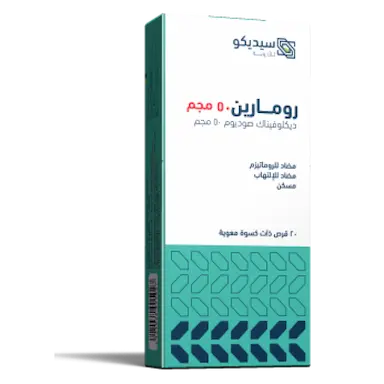
Rheumarene 50 mg
A comprehensive guide to the tablets for pain relief and treatment of arthritis and rheumatism.
Quick Facts
Diclofenac Sodium
Within 1-2 hours
Essential, after meals
Risk to heart and stomach
Avoid in third trimester
Room temperature
What is Rheumarene and What is it Used For?
Rheumarene is a medication belonging to the family of nonsteroidal anti-inflammatory drugs (NSAIDs), containing the active ingredient “Diclofenac Sodium.” The drug works to relieve pain, reduce inflammation and swelling, and lower high temperatures. It does this by preventing the production of chemicals in the body called prostaglandins, which play a key role in causing inflammation and the sensation of pain.
Thanks to its dual action as an analgesic and anti-inflammatory, Rheumarene is widely used to manage a variety of painful conditions, especially those related to the musculoskeletal system.
- Chronic joint diseases: Such as rheumatoid arthritis and osteoarthritis.
- Back and spine pain: Including cases of slipped discs and ankylosing spondylitis.
- Acute gout attacks: To relieve severe pain and swelling in the affected joint.
- Other pains: Such as menstrual pain, and pain after minor injuries and surgeries.
How to Use and Dosage
Rheumarene tablets should be taken exactly as directed by your doctor. The basic rule is to use the lowest effective dose for the shortest possible duration. The tablet should be swallowed whole with a glass of water, and it is best to take it during or immediately after a meal to reduce the risk of stomach upset.
The usual adult dose is one tablet (50 mg) two to three times a day. In some cases, the doctor may start with a higher dose and then reduce it. Do not crush, chew, or break the tablet, especially if it is enteric-coated, as this can affect its efficacy and increase stomach irritation.
Potential Side Effects
Like all medicines, Rheumarene can cause side effects, although not everybody gets them. The most common effects are related to the digestive system.
- Common effects: Stomach pain, nausea, heartburn, diarrhea, indigestion, headache, and dizziness.
- Serious effects (require stopping the drug immediately): Signs of stomach bleeding (black stools, bloody vomit), chest pain or shortness of breath (signs of a heart attack), sudden weakness on one side of the body (a sign of a stroke), or a severe allergic reaction.
If you experience any of the serious symptoms, seek emergency medical help immediately.
Important Warnings and Precautions
Rheumarene, like other NSAIDs, carries important warnings that must be considered. It increases the risk of serious cardiovascular problems, such as heart attacks and strokes, especially with long-term use. It also increases the risk of bleeding or ulcers in the stomach and intestines.
- Heart and blood pressure patients: Must be used with extreme caution, as it can cause high blood pressure and worsen heart failure.
- Kidney and liver patients: Extreme caution is needed as the drug is eliminated via the kidneys and liver.
- The elderly: Are more susceptible to side effects, especially stomach and kidney problems.
- Pregnancy: It is prohibited in the last three months of pregnancy.
About the Manufacturer: SEDICO
This product is manufactured by “SEDICO,” the South Egypt Drug Industries Company, one of the leading firms in the Egyptian pharmaceutical sector. Since its establishment in 1990, “SEDICO” has been committed to applying the highest international quality standards and current Good Manufacturing Practices (cGMP) to ensure the safety and efficacy of its products.
The company is known as a pioneer in biotechnology in the region, having been the first to produce human insulin and growth hormone. With its diverse pharmaceutical portfolio covering many therapeutic areas, “SEDICO” has become a trusted brand among doctors and patients in Egypt and many countries in the Middle East and Africa.
More information and contact with SEDICO: Please visit the following link
Frequently Asked Questions about Rheumarene
1. What is the difference between Diclofenac Sodium (Rheumarene) and Diclofenac Potassium (Cataflam)?
The main difference between them lies in the speed of absorption. Diclofenac Potassium is absorbed more rapidly in the body, which makes it start working faster. For this reason, it is preferred for acute pain that requires quick relief, such as toothaches or migraines.
On the other hand, Diclofenac Sodium (Rheumarene) is absorbed more slowly and often comes in enteric-coated tablets to protect the stomach and release the drug gradually. This makes it more suitable for chronic conditions that require sustained pain and inflammation relief, such as arthritis.
2. Is Rheumarene safe for long-term use?
It is not recommended to use Rheumarene or any NSAID for long periods without close medical supervision. Long-term use significantly increases the risk of serious side effects, including heart attacks, strokes, stomach ulcers and bleeding, and kidney problems.
If you require long-term treatment for a chronic condition like arthritis, your doctor will monitor you regularly and may prescribe additional medications to protect your stomach. You should always use the lowest effective dose for the shortest possible duration to control symptoms.
3. Why must Rheumarene be taken after food?
Rheumarene should always be taken with or immediately after food to protect the stomach lining. NSAIDs work by inhibiting COX enzymes, and one of these enzymes (COX-1) is responsible for producing a protective mucous layer in the stomach. When this enzyme is inhibited, the stomach becomes more vulnerable to damage from acids.
The presence of food in the stomach acts as a temporary barrier and reduces the direct contact of the drug with the stomach wall, which minimizes irritation and the risk of heartburn or pain. Never take this medication on an empty stomach.
4. Can I take Rheumarene for a regular headache?
Although Rheumarene can relieve headaches, it is not considered the first-choice option for a regular or tension headache. Simpler pain relievers like paracetamol or ibuprofen are usually sufficient and safer for this type of headache. Rheumarene is a stronger drug and carries greater risks.
Rheumarene is best reserved for more severe pain or pain where inflammatory components are significant, such as joint pain or severe migraines. Do not use prescription medications for minor conditions that can be treated with simpler drugs without medical advice.
5. Does Rheumarene affect blood pressure?
Yes, Rheumarene can affect blood pressure. NSAIDs can cause sodium and water retention in the body, which can lead to high blood pressure or worsen the condition in patients who already have it. This effect contributes to the increased risk of heart disease.
If you have high blood pressure and take medication to control it, you should monitor your pressure regularly when starting Rheumarene. This drug may reduce the effectiveness of some blood pressure medications. Always consult your doctor before starting treatment.
6. Is Rheumarene safe for kidney patients?
Rheumarene should be used with extreme caution or avoided altogether in kidney patients. Prostaglandins, which the drug inhibits, play an important role in maintaining blood flow to the kidneys. When these substances are inhibited, blood flow can decrease, which can impair kidney function and increase the risk of acute kidney failure.
Patients who already have kidney disease, the elderly, or those taking other drugs that affect the kidneys (like diuretics) are at the highest risk. Do not take this medication if you have severe kidney disease without consulting your doctor.
7. Can I drink alcohol while taking Rheumarene?
It is strongly advised to avoid drinking alcohol while on treatment with Rheumarene. Both alcohol and Rheumarene can irritate the stomach lining. Taking them together significantly increases the risk of serious gastrointestinal problems, including gastritis, ulcers, and bleeding.
If you are taking the drug for a short period, it is best to abstain from alcohol completely. If you are taking it chronically, the risks are much higher. The safety of your digestive system should be the priority.
8. What are the signs of stomach bleeding from this drug?
It is essential to know the signs of stomach bleeding, as it is a medical emergency. If you notice any of the following symptoms, stop taking the drug and seek immediate medical help: severe and persistent stomach pain, black or tar-like stools, vomit containing blood or looking like coffee grounds, and feeling extremely weak and dizzy.
These symptoms indicate that the drug may have caused bleeding in the gastrointestinal tract. Rapid medical intervention is necessary to stop the bleeding and prevent serious complications. Never ignore these signs.
9. Can I break a Rheumarene tablet in half?
No, you should not break, crush, or chew Rheumarene tablets, especially if they are enteric-coated. This coating is specifically designed to protect the stomach from the drug, and to protect the drug from stomach acid, allowing it to dissolve and be absorbed in the small intestine.
Breaking the tablet destroys this protective coating, which can lead to increased stomach irritation and reduced effectiveness of the drug. The tablet should always be swallowed whole with plenty of water. If you need a lower dose, consult your doctor to prescribe a lower-strength medication.
10. What should I do if I miss a dose?
If you miss your dose, take it as soon as you remember. However, if it is very close to the time for your next dose (for example, if less than 4 hours remain), skip the missed dose completely and wait for your next scheduled dose.
Do not take a double dose (two tablets together) to make up for the one you missed, as this increases the risk of side effects, especially on the stomach. Try to stick to a regular schedule for taking the medication to ensure the best results.
Medical Disclaimer
The information contained in this article is for educational purposes only and should not be considered a substitute for professional medical advice. Do not diagnose or treat any health condition on your own. Always consult your doctor or pharmacist before starting any new medication or making any changes to your treatment plan. We assume no responsibility for any misuse of the information provided.

Dr. Ahmad Baker, PharmD
Senior Pharmacist & Health Educator
With over 23 years of clinical experience in hospital and community pharmacy across Egypt and Saudi Arabia, Dr. Ahmad specializes in reproductive health and pharmaceutical safety. He is dedicated to providing evidence-based guidance to empower patients in the MENA region.
Medical Disclaimer: This content is for educational purposes and reflects the latest pharmaceutical protocols. It is not a substitute for personal medical advice. Always consult Dr. Ahmad Baker or your healthcare provider before starting any treatment.