
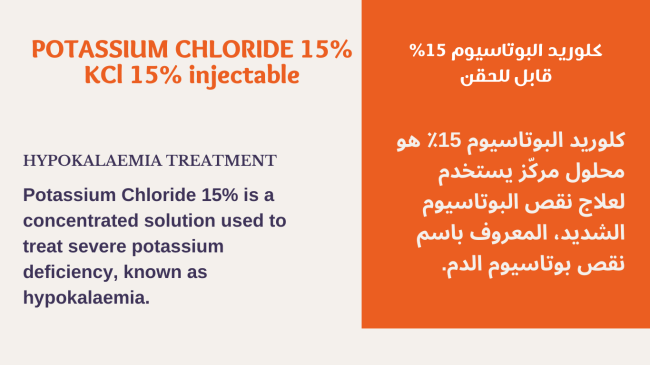
Potassium Chloride 15% is a concentrated solution used to treat severe potassium deficiency, also known as hypokalaemia. This condition can lead to various health issues, including cardiac arrhythmias and muscular weakness. Understanding the proper use, dosage, side effects, and precautions associated with Potassium Chloride 15% is crucial for safe and effective treatment.
What is Potassium Chloride 15% and What Is It Used For?
Potassium Chloride 15% is a medication primarily used to treat severe potassium deficiency. Potassium is an essential electrolyte that plays a vital role in maintaining normal heart, muscle, and nerve function. When the body’s potassium levels drop significantly, it can lead to hypokalaemia, which can cause serious health problems.
Uses of Potassium Chloride 15%
- Treating Hypokalaemia: Potassium Chloride 15% is used to restore normal potassium levels in the body. Hypokalaemia can occur due to various reasons, including diuretic use, vomiting, diarrhea, and certain medical conditions.
- Managing Cardiac Arrhythmias: Potassium deficiency can lead to irregular heartbeats, which can be life-threatening. Potassium Chloride 15% helps stabilize heart rhythm by correcting the electrolyte imbalance.
- Addressing Muscular Weakness: Severe potassium deficiency can cause significant muscular weakness, which can be debilitating. This medication helps restore muscle function by replenishing potassium levels.
How It Works
Potassium Chloride 15% works by increasing the amount of potassium in the body. When administered intravenously, it quickly raises potassium levels, helping to restore normal bodily functions.
Before You Use Potassium Chloride 15%
Warnings and Precautions
- Professional Supervision: Potassium Chloride 15% should only be administered by or under the direct supervision of a healthcare professional. Incorrect administration can be fatal.
- Contraindications: This medication should not be used in patients with hyperkalaemia (high potassium levels) or conditions that predispose them to hyperkalaemia, such as severe renal impairment.
- Special Precautions: Patients with heart disease, renal impairment, or other conditions that affect electrolyte balance should be closely monitored during treatment.
- Monitoring: Regular monitoring of blood potassium levels and ECG is essential during administration to prevent overdose and ensure safety.
Drug Interactions
Potassium Chloride 15% can interact with several medications, leading to potentially dangerous side effects. Some of the drugs that may interact include:
- Potassium-Sparing Diuretics: Such as spironolactone and amiloride.
- ACE Inhibitors: Such as enalapril and lisinopril.
- NSAIDs: Such as ibuprofen and naproxen.
- Other Medications: Such as cyclosporine and heparin.
It is crucial to inform your doctor about all medications you are taking to avoid harmful interactions.
How to Use Potassium Chloride 15%
Dosage
The dosage of Potassium Chloride 15% is determined by a healthcare professional based on individual needs and blood potassium levels. General dosage guidelines are as follows:
- Adults: The typical dose is 20-40 mmol of potassium, administered over 2-3 hours. The maximum infusion rate should not exceed 20 mmol/hour.
- Children: The dose is calculated based on body weight and potassium deficit. The usual dose is 0.5-1 mmol/kg, administered over 2-3 hours.
Calculating Potassium Deficit
The potassium deficit can be calculated using the following formula:
Potassium Deficit (mmol)= Desired Serum Potassium−Actual Serum Potassium)×Body Weight (kg)×0.4
Administration
Potassium Chloride 15% is administered intravenously as a slow drip. It must be diluted before administration to prevent tissue damage and ensure safe delivery.
Dilution Process
- Dilution: Dilute the concentrated solution in a compatible intravenous fluid, such as 0.9% sodium chloride or 5% dextrose.
- Concentration: The recommended concentration for infusion is 40 mmol/L.
- Mixing: Mix the solution thoroughly to ensure even distribution of the potassium.
- Handling: Handle the solution carefully to avoid contamination and ensure sterility.
Possible Side Effects
Serious Side Effects (Hyperkalaemia)
Hyperkalaemia is a serious side effect of Potassium Chloride 15% overdose. Symptoms include:
- ECG Abnormalities: Such as peaked T waves and prolonged PR interval.
- Irregular Heartbeat: Which can lead to cardiac arrest.
- Muscle Weakness: And paralysis.
Seek immediate medical attention if any of these symptoms occur.
Other Side Effects
Other possible side effects include:
- Pain at the Injection Site
- Nausea
- Venous Thrombosis
Reporting Side Effects
Report any side effects to your doctor. In the UK and Ireland, you can also report side effects to the relevant authorities:
- UK: Medicines and Healthcare products Regulatory Agency (MHRA)
- Ireland: Health Products Regulatory Authority (HPRA)
Storage and Handling
Storage Instructions
- Temperature: Store Potassium Chloride 15% at room temperature (15-30°C).
- Light: Protect from light.
- Container: Keep the ampoules in the original container to protect from light and moisture.
Important Handling Notes
- Check Solution: Inspect the solution for cloudiness or particles before use.
- Single Use: Ampoules are for single use only.
- Dilute Before Use: Always dilute the concentrated solution before administration.
- Opening Ampoules: To open, hold the ampoule upright and snap the neck at the colored line.
Disclaimer
The information provided in this article is for general knowledge and should not be considered a substitute for professional medical advice. Always consult a healthcare professional for personalized medical guidance.
Conclusion
Potassium Chloride 15% is a crucial medication for treating severe potassium deficiency. Understanding its uses, dosage, side effects, and precautions is essential for safe and effective treatment. Always consult a healthcare professional before using this medication.

Dr. Ahmad Baker, PharmD
Senior Pharmacist & Health Educator
With over 23 years of clinical experience in hospital and community pharmacy across Egypt and Saudi Arabia, Dr. Ahmad specializes in reproductive health and pharmaceutical safety. He is dedicated to providing evidence-based guidance to empower patients in the MENA region.
Medical Disclaimer: This content is for educational purposes and reflects the latest pharmaceutical protocols. It is not a substitute for personal medical advice. Always consult Dr. Ahmad Baker or your healthcare provider before starting any treatment.