
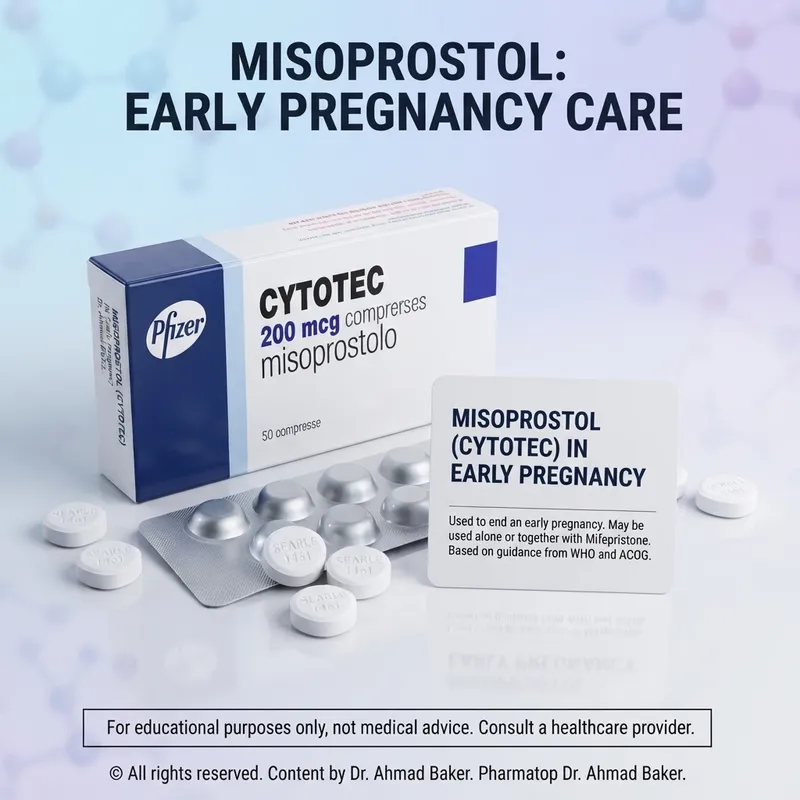
Clinical Pharmacotherapy of Misoprostol in Early Pregnancy Termination: An Evidence-Based Monograph
Clinical Abstract: This clinical monograph provides an exhaustive pharmacological evaluation of Misoprostol, a synthetic prostaglandin E1 analogue, utilized either as monotherapy or in sequential combination with Mifepristone for first-trimester medical abortion. Grounded in the latest guidance from the World Health Organization (WHO) and the American College of Obstetricians and Gynecologists (ACOG), this guide reviews molecular mechanisms, pharmacokinetics across diverse administration routes, dosing protocols, contraindications, and risk-mitigation frameworks. This resource serves as a definitive clinical reference for healthcare practitioners and researchers seeking high-level, evidence-based reproductive healthcare guidance.
📑 Comprehensive Monograph Contents
⚡ Pharmaceutical Factsheet
| Active Pharmaceutical Ingredient | Misoprostol (synthetic methyl ester of prostaglandin E1) |
| Pharmacological Class | Prostaglandin E1 (PGE1) Analogue / Uterotonic Agent |
| Bioavailability / Half-Life | Extensively absorbed; Active metabolite half-life (t½) ~20–40 minutes |
| Standard Dosage Forms | 200 mcg oral/vaginal/sublingual tablets |
| Regulatory Status | Rx-Only; Listed on WHO Model List of Essential Medicines |
| Hepatic / Renal Elimination | Rapidly de-esterified to misoprostol acid; excreted primarily in urine (73%) |
1. Molecule & Therapeutic Class
Misoprostol (chemically designated as methyl 7-[3-hydroxy-2-(4-hydroxy-4-methyl-oct-1-enyl)-5-oxo-cyclopentyl] heptanoate) is a synthetic methyl ester analogue of naturally occurring prostaglandin E1 (PGE1). Originally synthesized and patented by G.D. Searle & Company in 1973, Misoprostol was primarily developed as a cytoprotective agent for the prevention and treatment of non-steroidal anti-inflammatory drug (NSAID)-induced gastric ulcers. It achieved this via activation of parietal cell EP3 receptors, which downregulates adenylate cyclase and decreases gastric acid secretion.
However, the molecule’s profound off-target affinity for myometrial prostaglandin receptors quickly pivoted its clinical utility toward obstetrics and gynecology. Within the therapeutic classification of uterotonic agents and synthetic prostaglandins, Misoprostol has become a global clinical cornerstone. It is classified as an essential medicine by the World Health Organization (WHO) due to its high efficacy, thermal stability, ease of administration, and affordability compared to injectable uterotonics like oxytocin.
2. Mechanism & Pharmacokinetics
The therapeutic efficacy of Misoprostol in terminating pregnancy is mediated through its direct interaction with myometrial prostaglandin EP2, EP3, and EP4 receptor subtypes. The molecular cascade proceeds as follows:
EP Receptor Activation → G-protein Coupled Receptor (GPCR) Signaling → Intracellular Calcium (Ca²⁺) Mobilization from Sarcoplasmic Reticulum → Activation of Myosin Light-Chain Kinase (MLCK) → Myofibrillar Contraction & Cervical Ripening
Simultaneously, Misoprostol promotes cervical “ripening” or remodeling. It stimulates the secretion of collagenase and other proteolytic enzymes in the cervix, which degrades the extracellular matrix, depletes collagen fibers, and increases hydrophilic glycosaminoglycans. This dual physiological response—inducing synchronized, rhythmic uterine contractions while dilating and softening the cervix—mechanically expels the gestational tissue from the uterine cavity, mimicking a spontaneous abortion.
From a pharmacokinetic perspective, the route of administration drastically alters the plasma concentration-time profile of the active metabolite, misoprostol acid:
- Sublingual: Avoids first-pass hepatic metabolism. It exhibits the shortest time to peak concentration (Tmax ~26 minutes) and the highest peak plasma concentration (Cmax). This rapid onset triggers immediate, intense uterine contractions but is associated with a higher incidence of systemic side effects (pyrexia, chills, gastrointestinal distress).
- Vaginal: Characterized by gradual, sustained absorption (Tmax ~60–80 minutes). Although the Cmax is lower than the sublingual route, the total drug exposure (Area Under the Curve, or AUC) is significantly larger. This sustained plasma level produces prolonged uterine contractility, making it highly effective for advanced gestational ages within the first trimester.
- Buccal: Demonstrates pharmacokinetic properties intermediate to the sublingual and vaginal routes. Tmax is achieved at approximately 45–60 minutes, with a moderate Cmax and a sustained AUC, offering a balanced profile with fewer systemic side effects than the sublingual route.
- Oral: Suffers from rapid degradation and first-pass hepatic clearance. Tmax is reached within 14–30 minutes, but bioavailability is low and inconsistent. It is the least favored route for inducing myometrial contractility in first-trimester termination.
3. Clinical Indications (WHO vs FDA)
The regulatory and clinical landscapes for Misoprostol utilization display minor structural differences when comparing the guidelines of the World Health Organization (WHO) to the United States Food and Drug Administration (FDA) approved labeling:
1. FDA-Approved Protocol: The FDA approves Misoprostol as part of a combination regimen with the progesterone-receptor antagonist Mifepristone (Mifeprex) for the medical termination of intrauterine pregnancy through 70 days (10 weeks) of gestation. The FDA-approved label specifies a sequential protocol: 200 mg of Mifepristone orally, followed 24 to 48 hours later by 800 mcg of Misoprostol administered buccally.
2. WHO Clinical Guidelines: The WHO guidelines extend clinical indications up to 12 weeks (84 days) of gestation for home or self-managed administration, and beyond 12 weeks within clinical facilities. Furthermore, the WHO recognizes and provides comprehensive protocols for Misoprostol-only regimens in settings where Mifepristone is legally restricted or commercially unavailable. These standards are integrated into global clinical models to minimize unsafe abortive practices.
💬 Require Professional Guidance on This Medication?
Dr. Ahmad Baker and the clinical advisory team at Pharma Guide provide evidence-based, confidential pharmacological consultations.
Request Consultation4. Dosage Protocols & Kinetics
Medical abortion success rates depend on strict adherence to established, evidence-based dosing schedules. The clinical details for first-trimester protocols (up to 12 weeks) are outlined below:
Regimen A: Sequential Mifepristone & Misoprostol (Combined Regimen)
This combined approach represents the therapeutic “gold standard,” maximizing efficacy while minimizing patient distress and exposure to prolonged uterine cramping.
- Day 1: Administer Mifepristone 200 mg orally as a single dose. This blocks progesterone receptors, initiating decidual necrotization and sensitizing myometrial tissue to prostaglandins.
- Day 2 or 3 (24 to 48 hours later): Administer Misoprostol 800 mcg (four 200 mcg tablets) via sublingual, buccal, or vaginal routes.
- Clinical Note: For gestations between 9 and 12 weeks, if expulsion does not occur within 3 to 4 hours of the first Misoprostol dose, a second dose of Misoprostol 800 mcg may be administered.
- Efficacy: ~95%–98% complete abortion rate.
Regimen B: Misoprostol-Only Monotherapy
Indicated primarily in low-resource settings or jurisdictions where Mifepristone is inaccessible. Because the uterus has not been pre-sensitized by a progesterone blocker, a repeated dosing schedule is required to generate sufficient myometrial force.
- Initial Dose: Administer Misoprostol 800 mcg (four 200 mcg tablets) sublingually, buccally, or vaginally.
- Subsequent Doses: Administer additional doses of Misoprostol 800 mcg every 3 hours, up to a maximum of 3 doses (total 2400 mcg) within a 24-hour period.
- Clinical Justification: The 3-hour interval corresponds with the clearance half-life of misoprostol acid, ensuring sustained myometrial stimulation while avoiding toxic drug accumulation.
- Efficacy: ~80%–85% complete abortion rate.
For detailed clinical protocols across distinct trimesters, please visit the Medical Abortion Protocols portal.
5. Safety, Toxicology & Contraindications
While Misoprostol is remarkably safe, a precise toxicological screen and contraindication check must be conducted before initiating therapy.
Absolute Contraindications:
- Confirmed or Suspected Ectopic Pregnancy: Prostaglandin-induced uterine contractions are ineffective at resolving extrauterine gestations (e.g., tubal pregnancies). Delayed diagnosis of an ectopic rupture poses a life-threatening risk of intra-abdominal hemorrhage.
- Chronic Adrenal Failure: Relevant to combined regimens, as Mifepristone is a glucocorticoid receptor antagonist.
- Inherited Porphyria: Misoprostol may precipitate acute porphyric crises.
- Severe Bleeding Disorders or Anticoagulant Therapy: Therapeutic abortion involves predictable, significant bleeding. Underlying coagulopathies or therapeutic anticoagulation can lead to uncontrollable hemorrhage.
- Known Hypersensitivity: Prior anaphylactic or severe dermatological reactions to Misoprostol or other prostaglandins.
- In Situ Intrauterine Device (IUD): The IUD must be removed prior to drug administration to prevent uterine perforation or severe localized infection.
🚨 Urgent Clinical Alert: Immediate Emergency Criteria
Discontinue use and present immediately to an emergency medical facility if any of the following symptoms manifest:
- Severe Hemorrhage: Satiating more than two standard sanitary pads per hour for two consecutive hours.
- Sepsis Indicator: Persistent pyrexia (fever) exceeding 38.5°C (101.3°F) occurring more than 24 hours after the final Misoprostol dose.
- Hemodynamic Instability: Syncope (fainting), severe postural hypotension, tachycardia, or profound dizziness.
- Refractory Pain: Severe abdominal or pelvic pain that remains unresponsive to high-dose NSAID therapy (e.g., Ibuprofen 800 mg).
- Purulent Vaginal Discharge: Foul-smelling vaginal discharge indicating a potential reproductive tract infection.
6. Critical Drug-Drug Interactions
Misoprostol’s metabolic pathway limits its vulnerability to classical Cytochrome P450 (CYP) drug-drug interactions, as it does not undergo hepatic oxidation via the CYP enzyme superfamily. Instead, it undergoes rapid de-esterification by tissue esterases to its active form, misoprostol acid. Nonetheless, clinical pharmacology reveals several important interactions:
- Antacids (Magnesium-Containing): Co-administration of magnesium-containing antacids significantly exacerbates Misoprostol-induced diarrhea. If antacid therapy is clinically necessary for gastrointestinal distress, aluminum- or calcium-based formulations should be used.
- Non-Steroidal Anti-Inflammatory Drugs (NSAIDs): Although NSAIDs (such as Ibuprofen) act as cyclooxygenase (COX) inhibitors and block endogenous prostaglandin synthesis, clinical trials show they do not reduce the efficacy of exogenous prostaglandins like Misoprostol. They remain the primary recommendation for pain management.
- Highly Protein-Bound Medications: Misoprostol acid is approximately 80% to 90% bound to plasma proteins (mainly albumin). While clinically significant displacement interactions are rare, caution is advised when co-administering with narrow therapeutic index, highly protein-bound agents (e.g., Phenytoin, Warfarin).
7. Special Populations & Organ Clearance
Altered physiologic states require specific clinical adjustments to preserve therapeutic safety margins:
Hepatic Impairment: Because the primary metabolic pathway involves simple tissue esterase de-esterification rather than CYP-mediated hepatic oxidation, mild-to-moderate hepatic impairment does not significantly alter the pharmacokinetics of misoprostol acid. However, in patients with severe hepatic cirrhosis, a reduction in peak clearance may occur, warranting close clinical monitoring.
Renal Impairment: In patients with severe renal insufficiency or end-stage renal disease (ESRD), the Cmax, AUC, and elimination half-life of misoprostol acid are approximately doubled. Dosage adjustments are typically not required for single-day regimens, but these patients must be closely monitored for systemic toxicities, such as severe gastrointestinal cramping and hyperpyrexia.
Lactation: Misoprostol is excreted into human colostrum and breast milk in trace quantities. The active metabolite, misoprostol acid, is rapidly cleared from maternal serum. To prevent infant diarrhea, lactating patients should pump and discard breast milk for 4 to 6 hours following each Misoprostol dose.
Rh-Negative Patients: Rh-alloimmunization prevention remains a priority. In Rh-negative patients undergoing medical abortion, administration of RhD immunoglobulin (Anti-D) is indicated to prevent sensitization, particularly when the pregnancy has progressed beyond 8–9 weeks of gestation.
8. Bioequivalence & Counterfeiting Analysis
Due to restricted legal frameworks or pharmaceutical distribution barriers in several global regions, the market for Misoprostol has seen an influx of substandard and counterfeit generic preparations. It is critical for clinical pharmacists to evaluate product integrity:
Bioequivalence Standards: For generic formulations (such as Misotac, Mizotack, or Misoprost) to be deemed bioequivalent to the innovator drug (Cytotec), they must undergo rigorous High-Performance Liquid Chromatography (HPLC) assays. Bioequivalence requires that the 90% confidence intervals for both Cmax and AUC fall within the standard regulatory range of 80% to 125% of the reference product.
Identifying Counterfeit Formulations: Substandard preparations often exhibit rapid active pharmaceutical ingredient (API) degradation due to poor manufacturing practices. Genuine Misoprostol tablets are typically hexagonal, white, and marked with specific product codes (e.g., “SEARLE 1461” for 200 mcg tablets). Counterfeit products often display uneven compression, lack proper packaging inserts, or are sold as loose tablets without protective aluminum-aluminum blister packs.
9. Storage Chemistry & Stability
Misoprostol is a highly hygroscopic viscous oil at room temperature, making its chemical stability highly dependent on precise storage chemistry. The molecule is prone to degradation via dehydration, forming the inactive prostaglandin A analogues (PGA1).
⚠️ Stability Warning: Exposure to atmospheric moisture rapidly accelerates the degradation of Misoprostol. The drug must be stored strictly in sealed double-aluminum (Alu-Alu) blister packs at temperatures below 25°C (77°F). Once a blister pocket is punctured, the tablet must be administered immediately. Storage in loose plastic bottles or paper envelopes leads to rapid loss of potency within days.
10. Clinical Pharmacist Assessment
From a clinical pharmacy perspective, self-managed medical abortion utilizing Misoprostol represents a highly effective, demedicalized model of care, provided patients have access to accurate information. Pharmacists must prioritize the following harm-reduction steps:
- Gestational Age Verification: Ensuring the patient is within the first-trimester safety window (<12 weeks) through last menstrual period (LMP) calculations or ultrasonography.
- Strict Adherence Support: Emphasizing the clinical reasons for the 24-to-48-hour gap between Mifepristone and Misoprostol, or the 3-hour interval in Misoprostol-only regimens.
- Evidence-Based Pain Management: Educating patients that pre-emptive administration of Ibuprofen (400–600 mg) 30 minutes before Misoprostol administration is highly effective and does not reduce the drug’s abortifacient efficacy.
For further clinical reference materials and specialized support, healthcare providers are encouraged to consult the Women’s Specialized Clinical Care and Sexual & Reproductive Health Hub archives.
❓ Frequently Asked Clinical Questions
❓ What are the pharmacokinetic differences between sublingual and vaginal administration of Misoprostol?
Sublingual administration results in rapid absorption, achieving a higher peak plasma concentration (Cmax) and a shorter time to peak (Tmax ~26 min) compared to vaginal administration. This rapid peak triggers stronger, more immediate uterine contractions but is associated with more frequent systemic side effects, such as chills and hyperpyrexia. Conversely, vaginal administration produces slower, sustained absorption (Tmax ~60–80 min) with a lower Cmax but a significantly larger total drug exposure (AUC), providing prolonged uterine contractility with fewer acute systemic side effects.
❓ Does pre-treatment with Ibuprofen interfere with the uterotonic efficacy of Misoprostol?
No. Although Ibuprofen is an NSAID that inhibits cyclooxygenase (COX) enzymes and blocks endogenous prostaglandin synthesis, clinical studies demonstrate that it does not impair the therapeutic effect of exogenously administered prostaglandins like Misoprostol. Pre-emptive pain management with Ibuprofen (400–600 mg) is highly recommended to manage cramping without reducing abortifacient efficacy.
❓ Can Misoprostol be detected in maternal blood or urine assays?
While misoprostol acid can theoretically be detected using advanced liquid chromatography-mass spectrometry (LC-MS) assays, it is rapidly cleared from maternal plasma (half-life of 20–40 minutes). It is not included in standard hospital toxicology screens, blood panels, or urine assays. Consequently, there is no routine clinical test that can differentiate a Misoprostol-induced medical abortion from a spontaneous miscarriage.
❓ Why must Misoprostol be stored exclusively in double-aluminum blister packs?
Misoprostol is highly hygroscopic and chemically unstable. When exposed to ambient air and moisture, it undergoes rapid de-esterification and dehydration, converting into the inactive prostaglandin A1 (PGA1) analogue. Aluminum-aluminum (Alu-Alu) blister packaging provides an impermeable barrier to moisture and light. Storage in standard plastic pill organizers or bottles leads to rapid loss of potency.
❓ What is the clinical rationale for the 3-hour interval in Misoprostol-only regimens?
The 3-hour dosing interval is based on the elimination half-life of misoprostol acid (t½ ~20–40 minutes). This timing ensures that subsequent doses are administered as plasma concentrations decline, maintaining therapeutic myometrial contractility while preventing excessive accumulation and severe systemic side effects like hyperpyrexia.
❓ Are there Cytochrome P450 (CYP) drug-drug interactions with Misoprostol?
No. Misoprostol does not undergo significant hepatic oxidation via the Cytochrome P450 enzyme system. Its primary pathway is rapid de-esterification by tissue esterases into misoprostol acid, minimizing the risk of pharmacokinetic interactions with CYP inhibitors or inducers.
❓ How should Misoprostol dosing be managed in patients with severe renal impairment?
In patients with severe renal impairment or end-stage renal disease (ESRD), the Cmax and AUC of misoprostol acid can double. Dose adjustments are typically unnecessary for single-day regimens, but these patients must be closely monitored for systemic toxicities, such as severe gastrointestinal cramping and hyperpyrexia.
❓ What is the mechanism behind Misoprostol-induced chills and fever (pyrexia)?
Misoprostol directly interacts with the thermoregulatory center in the anterior hypothalamus. This prostaglandin-mediated resetting of the hypothalamic thermostat can trigger transient chills and a rise in body temperature (pyrexia). This is a common, self-limiting side effect that typically resolves within 24 hours of administration.
❓ Why is Misoprostol ineffective for terminating an ectopic pregnancy?
An ectopic pregnancy is located outside the uterine cavity, most commonly in the fallopian tubes. While Misoprostol stimulates myometrial contractions and cervical dilation, it does not induce contractility in fallopian tube tissue. Consequently, it cannot resolve extrauterine gestations, and attempting to use it can delay critical medical intervention.
❓ How soon does fertility return after a Misoprostol-induced abortion?
Fertility returns rapidly. Ovulation can occur as early as 8 to 14 days following expulsion of the gestational tissue. Patients should be advised that pregnancy is possible before the onset of the next menstrual cycle, and appropriate contraceptive measures should be initiated immediately if future pregnancy is not desired.
📚 Clinical References & Authoritative Sources
- World Health Organization. (2022). Clinical practice handbook for quality abortion care. Geneva: World Health Organization.
- American College of Obstetricians and Gynecologists (ACOG). (2020). Medication Abortion Up to 70 Days of Gestation. Practice Bulletin No. 225.
- U.S. Food and Drug Administration (FDA). Mifeprex (mifepristone) and Misoprostol Prescribing Information & Risk Evaluation and Mitigation Strategies (REMS).
- British National Formulary (BNF). Misoprostol: Guidance on Pharmacokinetics, Interactions, and Gynecological Indications. London: NICE Guidelines.
- International Federation of Gynecology and Obstetrics (FIGO). (2017). Misoprostol-only recommended dosages for obstetric and gynecological indications. International Journal of Gynecology & Obstetrics, 138(2), 232-235.
⚠️ Clinical Disclaimer
The clinical monographs published on Pharma Guide are intended strictly for educational and research purposes. They do not constitute an individualized physician-patient consultation or therapeutic endorsement. Pharmacotherapy must always be managed under the diagnostic supervision of a licensed physician or through clinical communication with Dr. Ahmad Baker. Review our complete Medical Disclaimer.
© 2026 Pharma Guide – Clinical Drug Index & Evidence-Based Protocols.
Under the Clinical Direction of Dr. Ahmad Baker | Editorial Policy | Medical Disclaimer | Contact Support

Dr. Ahmad Baker, PharmD
Senior Pharmacist & Health Educator
With over 23 years of clinical experience in hospital and community pharmacy across Egypt and Saudi Arabia, Dr. Ahmad specializes in reproductive health and pharmaceutical safety. He is dedicated to providing evidence-based guidance to empower patients in the MENA region.
Medical Disclaimer: This content is for educational purposes and reflects the latest pharmaceutical protocols. It is not a substitute for personal medical advice. Always consult Dr. Ahmad Baker or your healthcare provider before starting any treatment.