
Trade Name: Migaura Tablets
Generic Name: Metoclopramide HCl and Paracetamol
Composition
Each Migaura tablet contains:
- Metoclopramide HCl 5 mg
- Paracetamol 500 mg
Other Ingredients (Excipients):
Polyvinyl pyrrolidone K17, Lactose monohydrate, Purified talc, Maize starch, Magnesium stearate
Pharmaceutical Form
- Tablets for oral administration.
Pharmacological Action
Migaura combines metoclopramide and paracetamol to provide relief from migraines.
- Metoclopramide helps stimulate the muscles of the stomach, improving the movement of food through the stomach and intestines. This action speeds up gastric emptying, which is often delayed during migraine attacks.
- Paracetamol provides pain relief by blocking certain chemicals in the brain that signal pain. It is also absorbed more quickly when combined with metoclopramide.
Metoclopramide also has an antiemetic effect (prevents nausea and vomiting), which is beneficial for patients suffering from migraines, as these symptoms often accompany migraine attacks. The antiemetic action is primarily due to its ability to block dopamine receptors in the brain’s vomiting center, called the chemoreceptor trigger zone [part of the brain that detects toxins in the blood and triggers vomiting].
Pharmacokinetics
The combination of paracetamol and metoclopramide allows for faster absorption of paracetamol, especially during a migraine, when the absorption rate is typically reduced due to delayed gastric emptying.
Indications
Migaura is indicated for the symptomatic treatment of migraine. It provides relief from headache pain and also addresses nausea and vomiting that frequently accompany migraines.
Dosage and Administration
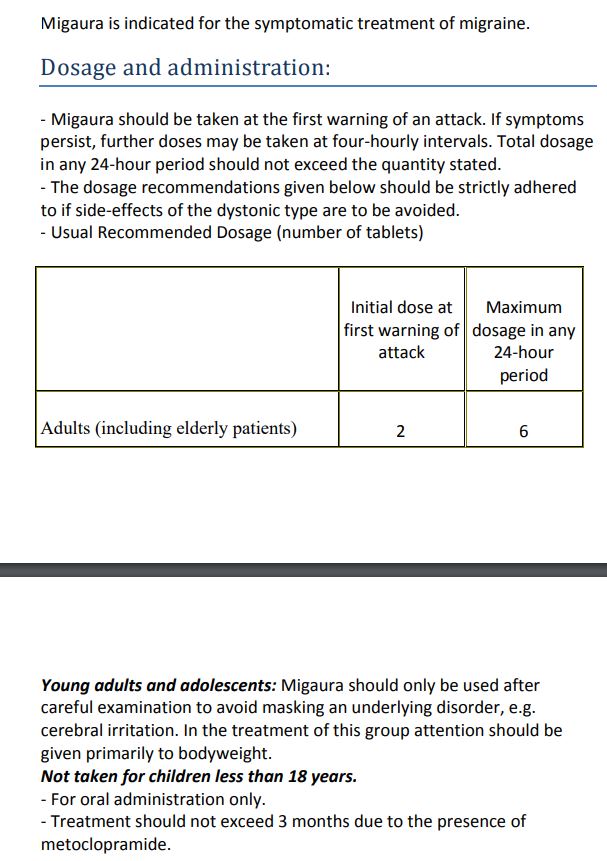
- Adults: Take 2 tablets at the first sign of a migraine attack. If needed, you can take further doses at 4-hour intervals. Do not exceed 6 tablets in 24 hours.
- Young adults and adolescents: Use only after careful examination by a doctor to rule out underlying conditions like cerebral irritation [irritation or inflammation in the brain].
- Children under 18: Migaura is not recommended.
- Treatment should not last longer than 3 months due to the risk of side effects from metoclopramide.
Contraindications
Do not use Migaura if you have:
- Hypersensitivity [allergic reaction] to paracetamol, metoclopramide, or any other ingredient.
- Gastrointestinal bleeding, obstruction, or perforation [damage in the stomach or intestines that prevents food movement].
- A history of tardive dyskinesia [involuntary, repetitive movements] caused by metoclopramide or neuroleptic drugs.
- Epilepsy [a condition characterized by repeated seizures], as metoclopramide may worsen seizures.
- Phaeochromocytoma [a rare tumor of the adrenal gland that can cause dangerously high blood pressure], due to the risk of hypertensive crisis.
- Recent gastrointestinal surgery, such as pyloroplasty [surgery to widen the opening from the stomach to the small intestine] or gut anastomosis [surgical connection of two parts of the intestines], as it may interfere with healing.
Side Effects
Some common side effects include:
- Nervous System and Psychiatric Reactions:
- Extrapyramidal symptoms [movement disorders caused by abnormal function in certain parts of the brain], including dystonia [muscle spasms], akathisia [restlessness], and tardive dyskinesia [involuntary movements, often in the face].
- Drowsiness, confusion, and hallucinations.
- Prolonged use may cause tardive dyskinesia, which can persist even after stopping the drug.
- Gastrointestinal Disorders:
- Diarrhea.
- Blood Disorders:
- Methaemoglobinaemia [a condition where the blood cannot carry enough oxygen], particularly in newborns.
- Sulfhaemoglobinaemia [a condition where sulfur is incorporated into the hemoglobin of the blood, affecting oxygen transport].
- Endocrine Disorders:
- Hyperprolactinaemia [high levels of prolactin, a hormone that can cause breast enlargement and milk production in both men and women].
- Cardiac and Vascular Disorders:
- Hypotension [low blood pressure], and in rare cases, bradycardia [slow heart rate] or heart block [delayed electrical signals in the heart].
Drug Interactions
Migaura may interact with:
- Levodopa (used for Parkinson’s disease) – the two drugs oppose each other’s effects.
- Alcohol – increases the sedative effects of metoclopramide and paracetamol.
- Oral contraceptives – can increase the clearance of paracetamol from the body.
- Warfarin – prolonged use of paracetamol can increase the risk of bleeding.
- Anticholinergics and morphine derivatives – can reduce the effectiveness of metoclopramide on gastrointestinal movement.
Pregnancy and Lactation
- Pregnancy: Migaura should only be used when absolutely necessary, especially during the first and second trimesters, as the risks to the fetus are unknown. Consult your doctor.
- Lactation: Both metoclopramide and paracetamol are excreted in breast milk. A decision should be made whether to discontinue breastfeeding or stop Migaura treatment, based on the risks.
Warnings and Precautions
- Do not take Migaura with any other paracetamol-containing products.
- Be cautious if you have liver disease or kidney problems, as the risk of overdose is higher.
- Treatment with metoclopramide should not exceed 3 months due to the risk of tardive dyskinesia.
- Neuroleptic Malignant Syndrome [a rare but life-threatening reaction to some medications characterized by fever, muscle stiffness, and altered mental state] may occur. Seek immediate medical attention if this happens.
Migaura Tablets are an effective treatment for migraines, but they must be used with care, particularly due to the risk of movement disorders and other side effects. Always follow your doctor’s recommendations, and avoid using them for prolonged periods.
MIGAURA TABLET is produced by Memphis Pharmaceutical Industries, an Egyptian company that distributes and exports its products to various countries in Africa and the Middle East.

Dr. Ahmad Baker, PharmD
Senior Pharmacist & Health Educator
With over 23 years of clinical experience in hospital and community pharmacy across Egypt and Saudi Arabia, Dr. Ahmad specializes in reproductive health and pharmaceutical safety. He is dedicated to providing evidence-based guidance to empower patients in the MENA region.
Medical Disclaimer: This content is for educational purposes and reflects the latest pharmaceutical protocols. It is not a substitute for personal medical advice. Always consult Dr. Ahmad Baker or your healthcare provider before starting any treatment.