
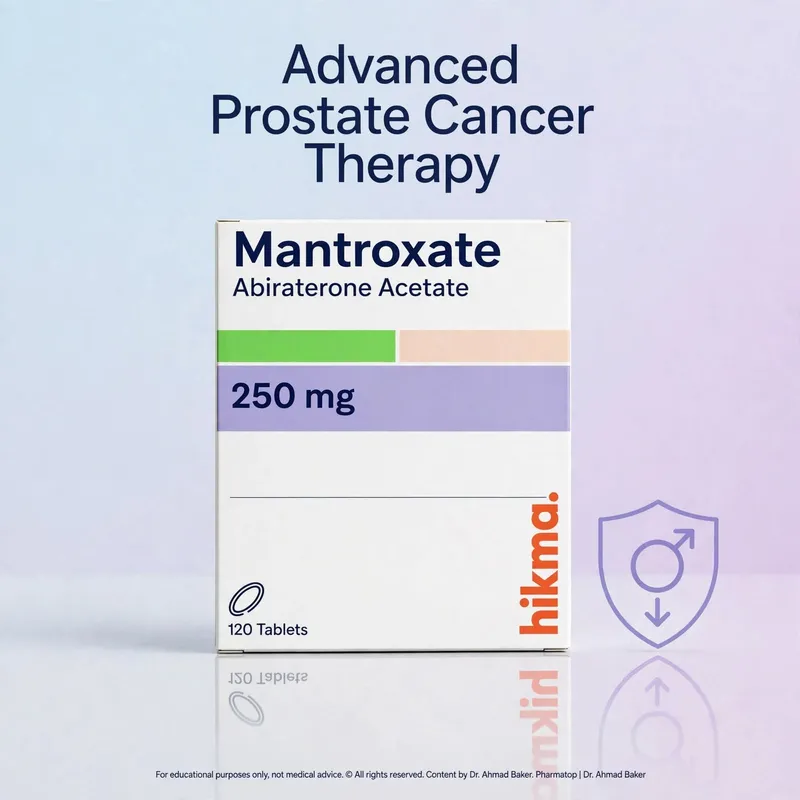
Mantroxate 250 mg (Abiraterone Acetate): Complete Clinical Guide to Dosing, Mechanism, Safety & Therapeutic Alternatives in Advanced Prostate Cancer
Mantroxate 250 mg is an oral androgen biosynthesis inhibitor containing abiraterone acetate, indicated for the treatment of metastatic castration-resistant prostate cancer (mCRPC) and high-risk metastatic castration-sensitive prostate cancer (mCSPC). Administered as a once-daily 1,000 mg dose on a strictly empty stomach alongside low-dose prednisone and continuous androgen deprivation therapy, this targeted hormonal agent blocks CYP17-mediated steroidogenesis across all three sources of androgen production — the testes, adrenal glands, and tumour microenvironment itself.
📑 Table of Contents
[Insert Mantroxate 250 mg Product Image Here]
⚡ Clinical Quick Facts: Mantroxate 250 mg
| 📦 Generic & Brand Names | Abiraterone Acetate / Mantroxate® 250 mg Tablets |
| 🔬 Active Molecule(s) | Abiraterone Acetate 250 mg (prodrug converted to abiraterone in vivo) |
| 💊 Dosage Form & Strength | Film-coated oral tablets; pack of 120 tablets (one full month supply) |
| 🏭 Manufacturer | Hikma Specialized Pharmaceuticals (Jordan) |
| 🌍 Origin / Distribution | Jordan – registered and distributed across MENA including Egypt |
| 📋 Regulatory Classification | Rx Only – Specialist-Initiated Oncology/Hormonal Agent (CYP17 Inhibitor) |
| 📏 Standard Adult Dosage | 1,000 mg once daily (4 × 250 mg tablets) on an empty stomach + prednisone |
| 📌 Prescription Required? | Yes – restricted to medical oncology or urology consultant supervision |
| 🏷️ Estimated Regional Cost | ~26,600 EGP per 120-tablet pack (Egypt) – subject to regulatory pricing updates |
1. What is Mantroxate (Abiraterone Acetate 250 mg)?
Mantroxate is a branded generic formulation of abiraterone acetate, a first-in-class steroidal androgen biosynthesis inhibitor that has fundamentally reshaped the therapeutic landscape for men with advanced prostate cancer. Unlike traditional androgen deprivation therapy (ADT), which suppresses testicular testosterone production through surgical orchiectomy or gonadotropin-releasing hormone (GnRH) analogues, abiraterone acetate operates at a deeper biochemical level by shutting down androgen synthesis at all three anatomical sources simultaneously: the gonads, the adrenal cortex, and the prostate tumour tissue itself.
The active compound is administered as a prodrug — abiraterone acetate — which undergoes rapid hydrolysis in the liver and peripheral tissues to yield the pharmacologically active metabolite, abiraterone. This active moiety then exerts its antineoplastic effect by irreversibly inhibiting the cytochrome P450 17A1 (CYP17) enzyme complex, a critical catalyst in the steroidogenic pathway that converts pregnenolone and progesterone into androgen precursors such as dehydroepiandrosterone (DHEA) and androstenedione.
Mantroxate is manufactured by Hikma Specialized Pharmaceuticals, a globally recognised generic and branded-generic pharmaceutical company headquartered in Jordan with manufacturing facilities compliant with US FDA and European EMA standards. The product is registered across multiple Middle Eastern and North African markets and represents a cost-effective bioequivalent alternative to the originator brand Zytiga (Janssen). For a broader overview of oncology therapeutics, consult the Pharma Guide Comprehensive Drug Index.
2. Detailed Composition & Mechanism of Action
Each film-coated tablet of Mantroxate contains 250 mg of abiraterone acetate alongside a carefully selected array of pharmaceutical excipients designed to ensure consistent disintegration, dissolution, and bioavailability within the gastrointestinal tract:
| Component | Quantity per Tablet | Pharmaceutical Function |
|---|---|---|
| Abiraterone Acetate | 250 mg | Active prodrug – irreversibly inhibits CYP17 (17α-hydroxylase / C17,20-lyase) to block androgen biosynthesis |
| Lactose Monohydrate | q.s. (filler) | Diluent providing structural bulk; caution in patients with galactose intolerance or Lapp lactase deficiency |
| Microcrystalline Cellulose | q.s. (binder) | Binding and disintegration agent ensuring controlled tablet breakdown in the stomach |
| Croscarmellose Sodium | q.s. (superdisintegrant) | Promotes rapid tablet fragmentation upon contact with gastric fluid for efficient drug release |
| Magnesium Stearate | trace (lubricant) | Prevents powder adhesion to tablet press tooling during high-speed manufacturing |
| Povidone & Colloidal Anhydrous Silica | trace amounts | Glidant and moisture-protective agents enhancing powder flow and stability |
Molecular Pharmacology: Tri-Source Androgen Suppression
The therapeutic brilliance of abiraterone lies in its capacity to achieve what conventional ADT alone cannot. Standard GnRH agonists or antagonists effectively silence testicular testosterone production, yet prostate cancer cells adapt by upregulating intratumoural steroidogenic enzymes and exploiting adrenal androgen precursors to sustain growth signalling through the androgen receptor (AR). Abiraterone eliminates this escape route by targeting CYP17, a bifunctional enzyme expressed in all three androgen-producing tissues:
- 17α-Hydroxylase activity blockade: Prevents the conversion of pregnenolone to 17-hydroxypregnenolone and progesterone to 17-hydroxyprogesterone — the obligatory first step in the androgen and cortisol biosynthetic cascades.
- C17,20-Lyase activity blockade: Prevents the subsequent cleavage of 17-hydroxypregnenolone and 17-hydroxyprogesterone into DHEA and androstenedione, respectively — the direct precursors of testosterone and dihydrotestosterone (DHT).
The net pharmacodynamic result is a reduction in circulating testosterone to undetectable levels (below the limit of quantification), even in patients whose disease has progressed despite castrate-level suppression via ADT. This profound androgen depletion deprives prostate cancer cells of their principal proliferative signal, triggering apoptotic cell death, tumour regression, and a corresponding decline in serum prostate-specific antigen (PSA).
3. Clinical Indications & Therapeutic Uses
Mantroxate (abiraterone acetate) is indicated in accordance with ASCO, EAU, and NCCN guideline recommendations for the following adult male patient populations:
- Metastatic Castration-Resistant Prostate Cancer (mCRPC): Indicated for men whose disease has progressed radiographically or biochemically (rising PSA) despite castrate serum testosterone levels (<50 ng/dL) achieved through bilateral orchiectomy or continuous GnRH analogue therapy. Abiraterone is approved both in the pre-chemotherapy setting (chemotherapy-naïve mCRPC, based on the COU-AA-302 trial) and in the post-docetaxel setting (COU-AA-301 trial), where it demonstrated statistically significant improvements in overall survival, radiographic progression-free survival, and PSA response rates compared to placebo plus prednisone.
- High-Risk Metastatic Castration-Sensitive Prostate Cancer (mCSPC / mHSPC): Indicated in combination with ADT and prednisone for men newly diagnosed with metastatic hormone-sensitive disease exhibiting high-risk features. The landmark LATITUDE trial established that upfront abiraterone plus prednisone and ADT reduced the risk of death by 38% compared to ADT alone, while significantly delaying the onset of skeletal-related events, pain progression, and the need for subsequent cytotoxic chemotherapy.
⚠️ Clinical Notice: Educational guidance only. Mantroxate is a highly specialised oncology agent. Initiation, dose modification, and discontinuation must be governed by a board-certified medical oncologist or urologic oncologist based on individual PSA kinetics, imaging findings, hepatic function, and cardiovascular risk stratification.
💬 Need Direct Clinical Consultation Regarding This Medication?
Connect directly with Dr. Ahmad Baker’s clinical team for confidential, evidence-based guidance tailored to your health profile.
Get Medical Support Meet Dr. Baker4. Dosage Regimens & Administration Guidelines
Standard Adult Dosing Protocol
- Mantroxate (abiraterone acetate): The recommended dose is 1,000 mg taken orally once daily, achieved by swallowing four 250 mg tablets together at the same time each day with a full glass of water. Tablets must be swallowed whole — they must not be crushed, chewed, or split.
- Concomitant Prednisone / Prednisolone:
• For mCRPC: Prednisone 5 mg orally twice daily (total 10 mg/day).
• For mCSPC: Prednisone 5 mg orally once daily.
The corticosteroid co-administration is not optional — it is a pharmacological necessity to prevent secondary mineralocorticoid excess (see mechanism explanation below). - Continuous ADT: Patients who have not undergone bilateral orchiectomy must continue receiving GnRH agonist or antagonist injections (e.g., goserelin, leuprorelin, degarelix) throughout the entire duration of Mantroxate therapy to maintain castrate testosterone levels.
Critical Administration Rule: Strict Fasting Requirement
This is the single most important adherence instruction for patients taking abiraterone acetate. Mantroxate tablets must be consumed on a completely empty stomach:
- Take the tablets at least 1 hour before eating any food, or at least 2 hours after your last meal.
- During the fasting window, only plain water is permitted. No milk, juice, tea, coffee, or nutritional supplements.
- Pharmacokinetic rationale: Co-ingestion of abiraterone with food — particularly high-fat meals — produces a dramatic, unpredictable increase in systemic drug exposure. Clinical pharmacokinetic studies have demonstrated that a high-fat meal can elevate the area under the curve (AUC) of abiraterone by up to 10- to 17-fold compared to the fasted state. This uncontrolled surge in plasma concentration substantially amplifies the risk of dose-dependent hepatotoxicity, mineralocorticoid excess, and cardiac arrhythmias.
Why is Prednisone Mandatory?
The inhibition of CYP17 by abiraterone does not selectively target androgen synthesis alone — it simultaneously blocks cortisol production in the adrenal zona fasciculata. The resulting hypocortisolaemia triggers a compensatory surge in adrenocorticotropic hormone (ACTH) secretion from the anterior pituitary via loss of negative feedback. Elevated ACTH drives the accumulation of upstream mineralocorticoid precursors (corticosterone and deoxycorticosterone), producing a syndrome of mineralocorticoid excess characterised by hypertension, hypokalaemia, and fluid retention. Low-dose prednisone replaces the suppressed cortisol, restores negative feedback on the hypothalamic-pituitary-adrenal axis, and effectively prevents this dangerous cascade.
Missed Dose & Overdose Management
If a dose of Mantroxate or prednisone is missed, the patient should skip the forgotten dose entirely and resume the regular schedule the following day. Doubling the dose to compensate for a missed tablet is contraindicated. In the event of accidental overdose, immediate medical evaluation is warranted with close monitoring of hepatic transaminases, serum electrolytes (particularly potassium), blood pressure, and cardiac rhythm. No specific antidote exists; management is supportive and symptomatic.
5. Adverse Drug Reactions & Contraindications
Mineralocorticoid Excess Syndrome (Very Common, >10%)
- Hypertension: Reported in 10–20% of patients. Blood pressure should be measured at least weekly during the first month and monthly thereafter. Antihypertensive therapy may need to be initiated or intensified.
- Hypokalaemia: Manifests as muscle weakness, leg cramps, palpitations, and fatigue. Serum potassium must be checked at baseline, biweekly for the first three months, and monthly thereafter. Potassium supplementation may be required.
- Peripheral oedema and fluid retention: Bilateral ankle and lower leg swelling is common and may necessitate diuretic therapy (spironolactone is preferred due to its anti-mineralocorticoid properties, though its use requires oncologist approval given theoretical AR agonism concerns).
Hepatotoxicity (Common, 1–10%)
Abiraterone can cause clinically significant elevations in alanine aminotransferase (ALT), aspartate aminotransferase (AST), and total bilirubin. Hepatic function tests must be performed every two weeks during the first three months of therapy and monthly thereafter. If ALT or AST exceeds 5× the upper limit of normal (ULN) or bilirubin exceeds 3× ULN, treatment should be interrupted until values return to baseline or ≤2× ULN, then restarted at a reduced dose of 500 mg daily with intensified monitoring. Permanent discontinuation is mandated if hepatotoxicity recurs at the reduced dose.
Other Frequently Reported Adverse Events
- Fatigue and asthenia (very common, often multifactorial).
- Hot flushes and night sweats (consequence of profound androgen deprivation).
- Arthralgia, myalgia, and accelerated bone mineral density loss (long-term ADT effect).
- Gastrointestinal disturbances: diarrhoea, dyspepsia, mild nausea.
- Haematological changes: anaemia, lymphopenia, and mild hypertriglyceridaemia.
- Urinary tract infections and upper respiratory tract infections.
Absolute Contraindications
- Severe hepatic impairment (Child-Pugh Class C) — use is strictly prohibited.
- Known hypersensitivity to abiraterone acetate or any tablet excipient.
- Women who are pregnant or may become pregnant (FDA Pregnancy Category X) — including handling of crushed or broken tablets without protective gloves.
🚨 Discontinue Immediately & Seek Urgent Medical Care If:
- You develop visible jaundice (yellowing of skin or sclera) accompanied by dark urine and right upper quadrant abdominal pain (acute hepatotoxicity).
- You experience rapid, irregular, or pounding heartbeats with severe dizziness, presyncope, or fainting (hypokalaemia-induced cardiac arrhythmia).
- You suffer sudden-onset dyspnoea with rapid weight gain, orthopnoea, and severe bilateral leg oedema (congestive heart failure).
- Your blood pressure reaches hypertensive crisis levels with severe throbbing headache, visual disturbances, or confusion.
- You develop signs of acute adrenal insufficiency: profound hypotension, intractable vomiting, and circulatory collapse — particularly following abrupt prednisone withdrawal or during severe intercurrent illness.
- You experience new-onset seizures or significant neurological changes.
6. Drug Interactions & Dietary Precautions
- Strong CYP3A4 Inducers (Avoid): Rifampicin, carbamazepine, phenytoin, phenobarbital, and St. John’s Wort (Hypericum perforatum) dramatically accelerate abiraterone metabolism, potentially reducing plasma concentrations to sub-therapeutic levels and compromising oncological efficacy. Co-administration should be avoided; if unavoidable, the oncologist may consider dose escalation with intensified monitoring.
- Strong CYP3A4 Inhibitors (Use with Caution): Ketoconazole, itraconazole, clarithromycin, and ritonavir can elevate abiraterone plasma levels, increasing the risk of hepatotoxicity and mineralocorticoid excess. Dose adjustments and closer laboratory surveillance are warranted.
- CYP2D6 Substrates (Monitor Closely): Abiraterone is a moderate inhibitor of CYP2D6. Concomitant use with narrow therapeutic index CYP2D6 substrates — such as flecainide, propafenone, metoprolol, and certain tricyclic antidepressants — may elevate their plasma concentrations and increase the risk of toxicity. Therapeutic drug monitoring or dose reduction of the co-administered agent may be necessary.
- QT-Prolonging Medications: Caution is advised when combining abiraterone with agents known to prolong the QTc interval (e.g., amiodarone, sotalol, moxifloxacin), particularly in the setting of concurrent hypokalaemia or hypomagnesaemia.
- Food and Grapefruit: As emphasised above, food intake must be strictly avoided around the time of dosing. Grapefruit and grapefruit juice should be entirely eliminated from the diet, as furanocoumarins in grapefruit inhibit intestinal CYP3A4 and can unpredictably increase abiraterone bioavailability.
7. Special Populations & Clinical Considerations
- Women & Pregnancy (FDA Category X — Absolute Contraindication): Mantroxate is indicated exclusively for male patients. Women of childbearing potential must not handle crushed, broken, or damaged tablets without nitrile or latex gloves, as abiraterone is readily absorbed transdermally and can cause catastrophic foetal harm, including ambiguous genitalia in male foetuses and pregnancy loss. Male patients with partners who are pregnant or capable of becoming pregnant must use a condom with an additional effective contraceptive method throughout treatment and for at least 3 months after the final dose.
- Hepatic Impairment:
• Child-Pugh A (mild): No initial dose adjustment required; standard monitoring applies.
• Child-Pugh B (moderate): Reduce starting dose to 250 mg once daily with weekly LFT monitoring.
• Child-Pugh C (severe): Absolutely contraindicated — the risk of fulminant hepatic failure outweighs any potential benefit. - Renal Impairment: No dose modification is required for patients with mild-to-moderate renal dysfunction. Abiraterone is primarily metabolised hepatically and excreted via the biliary-faecal route, with negligible renal clearance. However, caution is warranted in patients with renal impairment complicated by hypertension or electrolyte imbalances.
- Cardiovascular Disease: Patients with pre-existing heart failure, uncontrolled hypertension, or significant arrhythmias should have these conditions optimally managed before initiating Mantroxate. Baseline and periodic echocardiography may be indicated in high-risk individuals.
- Bone Health: Prolonged androgen deprivation combined with chronic low-dose corticosteroid use accelerates bone mineral density loss. Baseline DEXA scanning, calcium and vitamin D supplementation, and consideration of bone-modifying agents (zoledronic acid or denosumab) are recommended for all patients on long-term therapy. For further reading on specialised care considerations, visit the Women’s Specialised Clinical Care section (relevant for female caregivers and partners).
8. Generic Equivalents & Therapeutic Alternatives
The advanced prostate cancer treatment landscape offers several next-generation hormonal agents alongside abiraterone. The following comparison highlights the principal therapeutic options available to oncologists:
| Brand Name | Active Agent | Mechanism | Prednisone Required? | Food Restriction? |
|---|---|---|---|---|
| Mantroxate | Abiraterone acetate 250 mg | CYP17 inhibitor (androgen biosynthesis) | Yes (mandatory) | Strict fasting |
| Zytiga | Abiraterone acetate 250/500 mg | CYP17 inhibitor (originator brand) | Yes (mandatory) | Strict fasting |
| Xtandi | Enzalutamide 40 mg | Androgen receptor antagonist (AR) | Not required | With or without food |
| Erleada | Apalutamide 60 mg | Next-generation AR antagonist | Not required | With or without food |
| Nubeqa | Darolutamide 300 mg | AR antagonist (minimal BBB penetration) | Not required | Take with food |
The selection between these agents depends on disease stage, prior treatment exposure, comorbidity profile (particularly cardiovascular and seizure risk), patient preference regarding dosing convenience, and regional formulary availability. Dr. Ahmad Baker and the Pharma Guide clinical team can assist patients and caregivers in understanding these complex therapeutic decisions.
💬 Need Direct Clinical Consultation Regarding This Medication?
Connect directly with Dr. Ahmad Baker’s clinical team for confidential, evidence-based guidance tailored to your health profile.
Get Medical Support Meet Dr. Baker9. Regional Availability & Authentication Guide
- Regulatory Pricing (Egypt): The officially registered price for Mantroxate 250 mg (120 tablets, Hikma) is approximately 26,600 EGP per pack, representing a full 30-day treatment course at the standard 1,000 mg daily dose. This pricing reflects the Egyptian Drug Authority’s mandatory pricing framework and is significantly lower than the originator Zytiga, improving patient access to life-prolonging therapy.
- Insurance & Government Coverage: Abiraterone acetate is included in the approved treatment protocols of Egypt’s Universal Health Insurance system and the state-funded Medical Councils’ oncology committees. Eligible patients can obtain fully subsidised treatment through national cancer centres and specialised medical council decisions following multidisciplinary tumour board review and documentation of clinical eligibility criteria.
- Procurement & Authenticity Verification: Mantroxate is available through hospital oncology pharmacies, major retail pharmacy chains specialising in cancer medications, and authorised distribution networks. Always verify the Hikma holographic seal, batch/lot number, expiry date, and GTIN barcode on the outer carton. Report any packaging irregularities to the manufacturer’s pharmacovigilance department and the national drug regulatory authority.
- Storage Conditions: Store at room temperature below 30°C in a dry location protected from direct sunlight and moisture. Keep the tablets in their original blister packaging until the moment of administration. Store securely out of reach of children and, critically, away from any contact with pregnant women.
10. Clinical Pharmacist Verdict & Bottom Line
Key Clinical Advantages ✅
- Proven survival benefit: Landmark phase III trials (COU-AA-301, COU-AA-302, LATITUDE) have conclusively demonstrated statistically significant overall survival improvements in both mCRPC and mCSPC settings.
- Oral home-based therapy: Eliminates the need for frequent hospital infusion visits required by IV chemotherapy, preserving quality of life and reducing healthcare system burden.
- Cost-effective bioequivalent: As a Hikma-manufactured generic, Mantroxate offers equivalent pharmacokinetic and pharmacodynamic profiles to the originator Zytiga at a substantially lower price point, broadening access across resource-constrained healthcare systems.
- Effective skeletal protection: Significant delays in time to skeletal-related events and pain progression, reducing the devastating impact of bone metastases.
Notable Limitations ❌
- Rigid fasting requirement: The strict empty-stomach administration rule demands considerable lifestyle discipline and can be challenging for patients with irregular eating patterns or gastrointestinal comorbidities.
- Mandatory corticosteroid co-therapy: Chronic prednisone use carries its own metabolic risks including hyperglycaemia, osteoporosis, immunosuppression, and mood disturbances.
- Intensive monitoring burden: Biweekly liver function tests, regular electrolyte panels, and blood pressure surveillance impose a significant logistical commitment on patients and caregivers, particularly during the first three months.
Bottom Line: Mantroxate (abiraterone acetate) 250 mg represents a cornerstone of modern hormonal therapy for advanced prostate cancer, offering robust survival gains and meaningful quality-of-life improvements when administered correctly. Its clinical value is maximised when patients adhere strictly to the fasting protocol, maintain uninterrupted prednisone co-administration, and comply with the rigorous laboratory monitoring schedule. All treatment decisions must be made in close collaboration with the supervising medical oncologist.
❓ Frequently Asked Clinical Questions
❓ What is the best practical way to take Mantroxate on an empty stomach?
The most reliable approach is to take all four tablets immediately upon waking with a full glass of water, then wait at least one full hour before consuming breakfast or any beverage other than water. Alternatively, take the dose at least two hours after your evening meal, just before bedtime. Consistency in timing is key to maintaining stable drug levels.
❓ Can I stop taking prednisone if I dislike corticosteroid side effects?
Absolutely not. Prednisone is not an optional adjunct — it is a pharmacological safeguard that prevents life-threatening mineralocorticoid excess caused by CYP17-mediated cortisol suppression. Abruptly discontinuing prednisone can trigger an adrenal crisis with severe hypotension, electrolyte derangement, and cardiovascular collapse. Any dose adjustments must be directed by your oncologist.
❓ What should I do if I miss a dose of Mantroxate?
Skip the missed dose entirely and take your next scheduled dose at the usual time the following day on an empty stomach. Never double the dose to compensate. If you miss more than one consecutive dose, contact your oncology team promptly for guidance.
❓ What laboratory tests are required during Mantroxate therapy?
Essential monitoring includes liver function tests (ALT, AST, bilirubin) every two weeks for the first three months then monthly, serum electrolytes (especially potassium and sodium) at the same intervals, regular blood pressure measurements, serum PSA for disease response assessment, and periodic complete blood counts. Your oncologist may also order testosterone levels to confirm castrate status.
❓ Is Mantroxate a chemotherapy drug?
No. Mantroxate is a targeted hormonal therapy (androgen biosynthesis inhibitor), not a cytotoxic chemotherapy agent. It does not cause the classic chemotherapy side effects such as severe alopecia, profound myelosuppression, or severe mucositis. Its mechanism is fundamentally different — it starves cancer cells of the hormonal signals they need to grow rather than directly attacking rapidly dividing cells.
❓ Why must pregnant women avoid handling Mantroxate tablets?
Abiraterone acetate is readily absorbed through the skin and is classified as FDA Pregnancy Category X. In a developing male foetus, exposure to this potent androgen synthesis inhibitor can cause severe genital malformations, ambiguous genitalia, and pregnancy loss. Women who are or may become pregnant must never handle crushed or broken tablets without impermeable gloves.
❓ What is the difference between Mantroxate and Zytiga?
Both contain the identical active ingredient (abiraterone acetate) at the same strength and are considered bioequivalent. Zytiga is the originator brand developed by Janssen (Johnson & Johnson), while Mantroxate is a licensed generic manufactured by Hikma Pharmaceuticals. The clinical efficacy and safety profiles are equivalent; the primary difference is cost, with Mantroxate offering a more affordable option that improves patient access.
❓ Do I need to continue GnRH injections while taking Mantroxate?
Yes, unless you have previously undergone surgical bilateral orchiectomy. Continuous GnRH analogue therapy (e.g., goserelin, leuprorelin, degarelix) must be maintained throughout the entire course of Mantroxate treatment to ensure that testicular testosterone production remains suppressed at castrate levels. Discontinuing ADT while on abiraterone would undermine the therapeutic strategy.
❓ How long will I need to take Mantroxate?
Treatment continues for as long as the disease remains controlled — evidenced by stable or declining PSA levels, absence of radiographic progression, and tolerable side effects. Many patients remain on therapy for years. Treatment is discontinued only when the oncologist determines that the disease has progressed despite therapy or when unacceptable toxicity develops.
❓ Does Mantroxate affect bone health?
Yes. The combination of profound androgen deprivation and chronic low-dose prednisone accelerates bone mineral density loss, increasing the risk of osteoporosis and fragility fractures. Your oncologist will typically recommend baseline DEXA scanning, daily calcium (1,000–1,200 mg) and vitamin D (800–1,000 IU) supplementation, and may prescribe bone-protective agents such as zoledronic acid or denosumab, particularly in patients with skeletal metastases.
⚠️ Medical Disclaimer
The clinical information on Pharma Guide is intended strictly for educational and informational purposes. It does not constitute personal medical diagnosis or individualized prescription advice. Never initiate, adjust, or terminate pharmacotherapy without direct clinical supervision from your physician or consulting Dr. Ahmad Baker. For full legal and clinical policies, consult our Medical Disclaimer and Editorial Policy.
📚 Explore Related Guides on Pharma Guide
© 2026 Pharma Guide – Clinical Drug Index & Reproductive Health.
Led by Dr. Ahmad Baker | Privacy Policy | Medical Disclaimer | Contact Us

Dr. Ahmad Baker, PharmD
Senior Pharmacist & Health Educator
With over 23 years of clinical experience in hospital and community pharmacy across Egypt and Saudi Arabia, Dr. Ahmad specializes in reproductive health and pharmaceutical safety. He is dedicated to providing evidence-based guidance to empower patients in the MENA region.
Medical Disclaimer: This content is for educational purposes and reflects the latest pharmaceutical protocols. It is not a substitute for personal medical advice. Always consult Dr. Ahmad Baker or your healthcare provider before starting any treatment.