
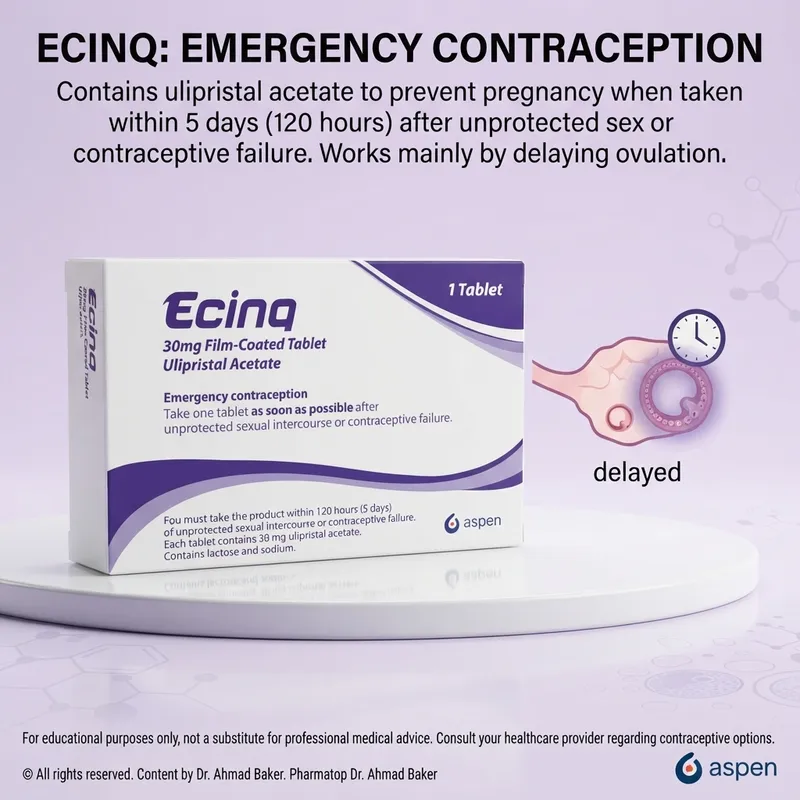
Ecinq 30 mg (Ulipristal Acetate): Clinical Pharmacist Monograph on Emergency Contraception, Mechanism, 120-Hour Window, and Drug Interactions
Ecinq 30 mg is a second-generation oral emergency contraceptive containing the selective progesterone receptor modulator (SPRM) ulipristal acetate. Indicated for post-coital pregnancy prevention within 120 hours (5 days) of unprotected sexual intercourse or contraceptive failure, Ecinq provides superior clinical efficacy over older levonorgestrel-based regimens by suppressing follicular rupture even after the luteinizing hormone (LH) surge has initiated. This monograph examines the molecular pharmacology, critical post-dose contraceptive resumption protocols, body weight considerations, and clinical safety parameters essential for patients and prescribing clinicians.
📑 Table of Contents

Figure 1: Ecinq 30 mg oral tablet – Secondary packaging and presentation for emergency contraception.
⚡ Clinical Quick Facts: Ecinq 30 mg
| 📦 Proprietary & Brand Names | Ecinq; International Reference Brands: ella (US), ellaOne (EU/UK) |
| 🔬 Active Pharmaceutical Molecule | Ulipristal acetate (synthetic selective progesterone receptor modulator – SPRM) |
| 💊 Dosage Form & Strength | 30 mg film-coated oral tablet (single-dose blister presentation) |
| 🏭 Primary Manufacturer | Regional licensed pharmaceutical manufacturers; innovator molecule developed by HRA Pharma |
| ⏱️ Approved Therapeutic Window | Up to 120 hours (5 days / 300,000 seconds) following unprotected intercourse or contraceptive failure |
| 📋 Regulatory Classification | Prescription-Only (Rx) in US and select Middle Eastern markets; Pharmacy Dispensed (Behind-the-Counter / OTC) in UK and Europe |
| 📏 Standard Adult Dosage | Single 30 mg oral tablet taken as soon as possible; repeated once only if emesis occurs within 3 hours |
| 🚫 Mechanism Classification | Anovulatory / Follicular Arrest. NOT an abortifacient; ineffective once blastocyst implantation has occurred |
| 🏷️ Estimated Pharmacy Cost | $25 to $55 USD per single-dose box depending on regional pricing and subsidy status |
1. What is Ecinq (Ulipristal Acetate)?
In clinical reproductive healthcare and outpatient pharmacotherapy, **Ecinq 30 mg** represents a second-generation emergency contraceptive pill (ECP). Unlike traditional first-generation emergency contraceptives that rely on the synthetic progestin levonorgestrel (such as Plan B One-Step, Postinor, or NorLevo), Ecinq utilizes **ulipristal acetate**, an advanced non-steroidal selective progesterone receptor modulator (SPRM).
The drug is formulated specifically as an urgent post-coital intervention for women who have engaged in unprotected penile-vaginal intercourse, experienced a mechanical barrier failure (such as condom rupture, slippage, or incorrect placement), missed consecutive doses of combined oral contraceptive pills (COCPs), experienced progestin-only pill (POP) timing delays, or suffered sexual assault.
A vital pharmacological distinction must be emphasized from the outset: **Ecinq is exclusively an anovulatory and anti-ovulatory emergency contraceptive; it is not an abortifacient.** It shares structural homologies with the antiprogestin mifepristone (RU-486), but the 30 mg dose of ulipristal acetate used in Ecinq does not possess the capacity to terminate an established, implanted pregnancy, nor does it disrupt post-implantation embryogenesis. If a woman is already pregnant at the time of ingestion, Ecinq will not disrupt the gestational sac, will not induce uterine evacuation, and will not increase the risk of fetal teratogenicity. Its clinical utility lies entirely in the prevention of fertilization by manipulating the neuroendocrine timing of ovulation.

Figure 2: Ulipristal acetate 30 mg oral tablet – A selective progesterone receptor modulator engineered for post-coital emergency intervention.
2. Ingredients & Mechanism of Action
The pharmacodynamic superiority of Ecinq over historical emergency contraceptive options stems from its receptor-binding profile. Ulipristal acetate acts as an orally active synthetic selective progesterone receptor modulator characterized by tissue-specific, mixed agonistic and antagonistic effects on human progesterone receptors (PR-A and PR-B).
| Component / Parameter | Chemical & Molecular Data | Clinical Pharmacological Function |
|---|---|---|
| Ulipristal Acetate (API) | • CAS Number: 126784-99-4 • Molecular Formula: C30H37NO4 • Molecular Weight: 475.62 g/mol • High affinity for human progesterone & glucocorticoid receptors | Binds competitively to the ligand-binding pocket of progesterone receptors in the hypothalamic-pituitary-ovarian axis, preventing endogenous progesterone signaling necessary for follicular rupture and ovum release. |
| Core Excipients | • Lactose monohydrate • Povidone K30 • Croscarmellose sodium • Magnesium stearate | Provides tablet structural matrix, rapid oral disintegration, optimal gastrointestinal dissolution, and stable solid-state bio-availability. |
| Pharmacokinetics (Absorption) | • Tmax: 0.5 to 1.0 hour post-ingestion • Cmax: ~176 ng/mL | Rapidly absorbed across the proximal gastrointestinal mucosa, ensuring rapid systemic receptor occupancy within minutes of ingestion. |
| Metabolism & Clearance | • Hepatic CYP3A4 primary monooxygenase • Active metabolite: Monodemethyl-ulipristal • Plasma Half-life (t1/2): ~32.4 hours | Extensively metabolized in the liver; active metabolite retains high PR binding affinity. Excretion is primarily fecal (>90%), with minor renal elimination. |
The Biological Race: Ovulatory Arrest and Follicular Physiology
Human spermatozoa possess the physiological capacity to maintain viability, motility, and fertilizing competence inside the crypts of the female cervix and upper genital tract for up to **120 hours (5 days)** following coitus. If ovulation occurs at any point during this 5-day lifespan, fertilization within the ampulla of the fallopian tube is probable.
The primary mode of action of Ecinq 30 mg is **follicular rupture delay**. In clinical pharmacodynamic trials, administration of ulipristal acetate suppresses the growth of the lead dominant ovarian follicle, postponing rupture for at least **5 to 6 days**. By delaying follicular rupture, the viable lifespan of the spermatozoa residing within the reproductive tract expires naturally before an oocyte is released.
Why Ulipristal Outperforms Levonorgestrel: The LH Surge Paradigm
The key clinical difference between ulipristal acetate and levonorgestrel centers on their behavior relative to the **luteinizing hormone (LH) surge**:
- Levonorgestrel’s Limitation: Levonorgestrel is capable of inhibiting ovulation *only* if administered prior to the beginning of the initial LH rise. Once serum LH concentrations begin their upward trajectory toward the ovulatory peak, levonorgestrel exhibits an ovulation-inhibition failure rate of almost 100%, rendering it ineffective on the days of highest conception probability (cycle days -2 to 0 relative to ovulation).
- Ulipristal’s Molecular Dominance: Ulipristal acetate exerts direct antagonistic actions within both the anterior pituitary gland and follicular granulosal cells. It successfully delays follicular rupture even when administered **after the LH surge has already begun** (up until the immediate LH peak). Clinical trials confirm that when dominant follicles reach a diameter ≥ 18 mm—where levonorgestrel fails—ulipristal acetate prevents follicular collapse in up to 78% of cases, providing protection late into the fertile window.
3. Clinical Indications & Critical Therapeutic Window
Ecinq 30 mg is indicated for emergency post-coital contraception in women of reproductive age following:
- Unprotected penile-vaginal intercourse without baseline contraception.
- Known or suspected primary barrier failure (condom slippage, breakage, puncture, or early removal).
- Significant oral contraceptive adherence errors:
- Missing two or more consecutive combined oral contraceptive pills (COCPs) containing ethinyl estradiol during the first week of a cycle, accompanied by unprotected intercourse during the prior 5 days.
- A delay of >3 hours in taking a traditional progestin-only pill (POP), or a delay of >12 hours for desogestrel-containing POPs, followed by intercourse.
- Late administration of long-acting depot medroxyprogesterone acetate (DMPA) injections (exceeding 13 to 15 weeks from the previous dose).
- Accidental dislodgement, expulsion, or delayed replacement of a transdermal contraceptive patch or combined contraceptive vaginal ring.
- Cases of non-consensual sexual contact (sexual assault) where baseline contraceptive coverage is absent or uncertain.

Figure 3: Time-to-treatment relationship – While Ecinq is active up to 120 hours, earlier administration provides superior pregnancy risk reduction.
The 120-Hour Window: Efficacy Dynamics Over Time
While levonorgestrel demonstrates a marked decline in efficacy after 72 hours—and carries no regulatory indication between 72 and 120 hours—pooled clinical trials published in The Lancet demonstrate that **ulipristal acetate maintains consistent pregnancy prevention throughout the entire 120-hour (5-day) timeframe**.
Across randomized controlled trials, ulipristal acetate reduced the risk of unintended pregnancy by **almost 60% compared to levonorgestrel**, preventing up to 85% of expected pregnancies when taken within 120 hours. However, because ovulation can occur at any moment during the menstrual cycle, clinical guidelines emphasize that **Ecinq should be ingested as rapidly as possible** following coitus. If follicular rupture occurs prior to tablet ingestion, post-coital pharmacotherapy will fail.
⚠️ Clinical Notice: Ecinq is formulated strictly for occasional, emergency rescue intervention. It must never serve as a routine, repetitive method of contraception. Ongoing primary contraceptive methods—such as intrauterine devices (IUDs), subdermal implants, or oral pills—provide significantly higher long-term cumulative protection, lower financial cost, and superior hormonal stability.
💬 Unsure About Timing or Contraceptive Options?
Connect with Dr. Ahmad Baker’s clinical team for confidential, evidence-based reproductive guidance tailored to your specific timeline.
Get Medical Support Sexual Health Hub4. Dosage Regimens & Administration Protocols
Administration of Ecinq 30 mg follows a standardized, single-dose oral protocol designed to minimize complexity during acute patient distress:

Figure 4: Standard administration: Take one whole 30 mg tablet orally with water as soon as possible within 120 hours.
- Standard Regimen: Ingest one single 30 mg tablet orally with a glass of water at any time during the menstrual cycle.
- Food Intake: Ecinq may be taken with or without food. Although high-fat meals slightly delay the time to peak concentration (Tmax shifts from 0.75 hours to 3 hours), total systemic exposure (AUC) remains biologically equivalent, meaning dietary status does not impact clinical efficacy.
- Repeated Coitus in the Same Cycle: If additional episodes of unprotected intercourse take place *after* taking Ecinq, the initial dose does not confer ongoing protection. However, repeating ulipristal acetate within the same cycle is generally not advised due to potential endocrine disruption; barrier protection (condoms) must be used until the next menses.
The 3-Hour Emesis Protocol
A critical clinical parameter is gastrointestinal absorption time:
- Vomiting Within 3 Hours of Ingestion: The active pharmaceutical ingredient may have been expelled prior to adequate mucosal absorption. **A replacement 30 mg tablet must be ingested immediately.** If persistent nausea is present, an oral antiemetic (such as metoclopramide 10 mg or ondansetron 4–8 mg) may be administered 30 minutes before taking the repeat dose.
- Vomiting Occurring After 3 Hours: Complete gastrointestinal absorption into the systemic circulation has occurred. No replacement tablet or dosage adjustment is required.
5. Adverse Drug Reactions & Contraindications
Ulipristal acetate 30 mg is generally well tolerated. Adverse effects are characteristically self-limiting, mild-to-moderate in intensity, and resolve spontaneously within 24 to 48 hours.

Figure 5: Anticipated post-administration symptoms: transient headache, nausea, pelvic cramping, and minor menstrual timing shifts.
Reported Adverse Reactions by Frequency
- Common (≥10% incidence): Headache (18%), nausea (12%), abdominal discomfort or lower pelvic cramping (12%), dysmenorrhea (9%).
- Less Common (1% to 10% incidence): Dizziness, generalized fatigue, breast tenderness (mastalgia), mood swings, back pain, transient hot flashes.
- Menstrual Timing Shifts: Because Ecinq suppresses follicular maturation, menstrual timing alterations are expected:
- Approximately 75% of women menstruate within ±7 days of their expected date.
- Menses arrives earlier than expected in ~7% of patients.
- Menses is delayed by more than 7 days in ~18% of patients.
- Intermenstrual spotting occurs in roughly 9% of cycles post-treatment.
Contraindications
- Absolute Contraindications: Known hypersensitivity or anaphylaxis to ulipristal acetate or any excipients; known or diagnosed ongoing intrauterine or extrauterine pregnancy (ineffective and clinically non-indicated).
- Severe Hepatic Impairment: Because ulipristal is extensively cleared via hepatic CYP3A4-mediated oxidation, it is contraindicated in patients with severe hepatic impairment (Child-Pugh Class C).
- Severe Asthma Unresponsive to Oral Steroids: Ulipristal acetate exhibits anti-glucocorticoid activity; caution is warranted in severe persistent asthma managed with systemic glucocorticoids.
- Rare Hereditary Metabolic Conditions: Contains lactose monohydrate; contraindicated in individuals with rare galactose intolerance, total lactase deficiency, or glucose-galactose malabsorption.
🚨 Seek Immediate Medical Attention If You Experience:
- Severe, sharp, persistent unilateral lower abdominal or pelvic pain (a critical clinical sign of an unsuspected ectopic pregnancy).
- A menstrual delay exceeding 7 days past the anticipated date, or abnormal vaginal bleeding accompanied by lightheadedness.
- Signs of systemic anaphylaxis: sudden urticarial skin rash, facial angioedema, swelling of the tongue or throat, or bronchospastic wheezing.
- Intractable emesis persisting beyond 24 hours that prevents adequate oral hydration.
6. Critical Drug & Hormonal Interactions
Ulipristal acetate exhibits critical pharmacokinetic and pharmacodynamic interactions that require strict adherence to clinical management guidelines:
1. The Progestin Contraceptive Conflict: The Mandatory 5-Day Waiting Window
A frequent clinical prescribing error occurs when regular hormonal contraception (pills, patches, rings, or injections) is restarted immediately after taking Ecinq.
- The Receptor Competition Mechanism: Ulipristal acetate and synthetic progestins (e.g., levonorgestrel, desogestrel, drospirenone, medroxyprogesterone) bind competitively to the same progesterone receptors. If a woman immediately takes a progestin-containing birth control pill right after Ecinq, the exogenous progestin can displace ulipristal from the receptors, reversing its ability to prevent ovulation. Concurrently, ulipristal can impair the contraceptive efficacy of the daily birth control. Both medications can fail.
- The Clinical Rule: Guidelines from the Faculty of Sexual and Reproductive Healthcare (FSRH) and the US Centers for Disease Control and Prevention (CDC) state that **patients must wait at least 5 days (120 hours) after taking ulipristal acetate before initiating or resuming any progestin-containing hormonal contraceptive**.
- Barrier Method Coverage: During the 5-day post-Ecinq waiting period *and* for the subsequent **7 days of continuous pill taking** (14 days for the Qlaira pill; 2 days for traditional POPs), patients must use a barrier method (male condoms) or abstain from coitus.
2. Hepatic Cytochrome P450 (CYP3A4) Modulators
Ulipristal is metabolized primarily via the CYP3A4 isoenzyme system:
- Potent CYP3A4 Inducers: Co-administration with potent enzyme inducers—including rifampin, carbamazepine, phenytoin, phenobarbital, primidone, efavirenz, and the herbal extract St. John’s Wort (Hypericum perforatum)—dramatically accelerates ulipristal metabolism, reducing plasma AUC by 50% or more and risking contraceptive failure.
Clinical Management: In women who have used a liver enzyme-inducing drug within the preceding 28 days, emergency oral ulipristal is not recommended. The **copper intrauterine device (Cu-IUD)** is the absolute first-line recommendation. If the Cu-IUD is refused or clinically unfeasible, a double dose of levonorgestrel (3 mg total) is indicated, as doubling ulipristal dosage is unvalidated. - Gastric pH Altering Agents: Histamine H2 receptor antagonists (e.g., famotidine) and proton pump inhibitors (e.g., omeprazole, pantoprazole) increase intragastric pH, leading to a modest reduction in ulipristal Cmax. However, overall bioavailability remains sufficient, and no dosage adjustments are clinically warranted.
7. Special Populations & Clinical Considerations
Clinical decisions surrounding emergency contraception must account for individual patient physiology:
The Impact of High Body Mass Index (BMI) and Obesity
Extensive epidemiological studies indicate that the clinical efficacy of oral emergency contraceptives is reduced in women with elevated body weight:
- Levonorgestrel Threshold: Levonorgestrel’s pregnancy-prevention efficacy begins to decline in women weighing over 70 kg (154 lbs) or with a BMI > 25 kg/m², dropping to near-placebo levels in women with a BMI ≥ 30 kg/m².
- Ulipristal Acetate Durability: Ulipristal acetate (Ecinq) maintains significantly greater contraceptive efficacy at higher weight classes. Its pregnancy prevention rate remains clinically effective up to a **BMI of 30 to 35 kg/m² (or body weight up to 85–90 kg)**.
- Severe Obesity (BMI > 35 kg/m²): In individuals with a BMI > 35 kg/m², both oral options experience efficacy declines. While Ecinq remains the superior oral option over levonorgestrel, clinicians must inform patients that the **copper intrauterine device (Cu-IUD) or levonorgestrel 52 mg IUD** provides the highest efficacy regardless of body weight.
Lactation & Breastfeeding Guidelines
Ulipristal acetate is a lipophilic compound that distributes into human breast milk. A nursing infant can ingest an estimated 0.75% of the maternal dose:
- The 7-Day Express-and-Discard Protocol: Manufacturer labeling and international health guidelines advise that **breastfeeding should be paused for 7 days (one week)** following the ingestion of Ecinq 30 mg.
- During this 7-day interval, the mother should use a breast pump to express and discard breast milk to maintain milk supply and prevent mastitis.
- Alternative: If pausing breastfeeding for 7 days is unfeasible or disruptive, **levonorgestrel 1.5 mg** serves as an alternative oral option, as breastfeeding can safely resume 8 hours following levonorgestrel administration.
8. Therapeutic Alternatives Comparison
Selecting the appropriate post-coital emergency method requires comparing clinical timing, efficacy, access, and long-term contraceptive needs:
| Contraceptive Modality | Primary Active Agent | Approved Window | Efficacy Relative to LH Surge | Weight Sensitivity & Notes |
|---|---|---|---|---|
| Ecinq / ella / ellaOne | Ulipristal Acetate 30 mg (SPRM) | 0 to 120 hours (5 days) | Suppresses ovulation even after LH rise has begun | Effective up to BMI ~30–35 kg/m²; requires 5-day pause before starting hormonal pills. |
| Plan B / Postinor / NorLevo | Levonorgestrel 1.5 mg (Progestin) | 0 to 72 hours (Unlabeled up to 120h) | Fails once LH surge has initiated | Significant efficacy drop in BMI > 25–30 kg/m²; compatible with immediate hormonal birth control start. |
| Copper IUD (Paragard / T-Safe) | Elemental Copper (Intrauterine device) | 0 to 120 hours (Up to day 5 of ovulation) | Inhibits fertilization & prevents blastocyst implantation (>99.9% efficacy) | The clinical gold standard; unaffected by body weight; provides ongoing contraception for 10–12 years. |
| Levonorgestrel 52 mg IUD (Mirena/Liletta) | Local intrauterine Levonorgestrel | 0 to 120 hours | Non-inferior to Copper IUD for emergency contraception | Highly effective regardless of BMI; provides 8 years of ongoing non-emergency contraception. |
💬 Comparing Emergency Options for Your Specific Case?
Do not guess your reproductive health. Review your timing and clinical history directly with our pharmacotherapy specialists.
Consult Our Clinical Team Women’s Care Archive9. Regional Availability & Authentication Guide
Regulatory classification for ulipristal acetate varies significantly across geographical markets:
- United Kingdom & European Union: Marketed primarily as *ellaOne*, it holds non-prescription status (Pharmacy Medicine / OTC), allowing direct dispensing by community pharmacists without a physician’s prescription following an in-pharmacy consultation.
- United States: Marketed as *ella*, it remains classified as a Prescription-Only Medication (Rx), requiring an authorized prescription from a physician, nurse practitioner, or certified clinical pharmacist.
- Middle East & GCC (Saudi Arabia, UAE, Egypt, Kuwait): Ecinq and regional equivalents are typically stocked in community and hospital pharmacies under Prescription-Only or Behind-the-Counter regulations. Patients should confirm availability promptly, as emergency contraception supplies can vary across regional pharmacy inventories.

Figure 6: Professional clinical consultation ensures authentic pharmaceutical sourcing and proper post-treatment follow-up.
Preventing Counterfeits and Verifying Authenticity
Because post-coital contraceptives carry emotional urgency, an illicit secondary grey market exists online. To ensure medication safety:
- Always source Ecinq from licensed, brick-and-mortar pharmacies or accredited healthcare delivery services. Avoid purchasing from unregulated social media vendors or unlicensed e-commerce websites.
- Verify that the external carton features a clear batch lot number, manufacturing date, and tamper-evident seal.
- Check the internal blister package for intact aluminum foil; the tablet is typically a round, biconvex, curved white-to-marble-white tablet debossed with standard manufacturer identification codes.
Storage Parameters
- Store at controlled room temperature between 15°C and 30°C (59°F to 86°F).
- Keep the blister inside the original cardboard carton to protect the photo-sensitive active ingredient from prolonged direct ultraviolet light exposure. Keep away from excessive humidity (do not store in steamy bathrooms).
10. Clinical Pharmacist Verdict & Bottom Line
⚖️ The Pharmacist’s Objective Assessment: Ecinq 30 mg
Clinical Strengths (The Pros):
- Extended Efficacy Window: Maintains reliable pregnancy risk reduction across a full 120-hour (5-day) timeframe, outlasting levonorgestrel.
- Superior Ovulation Suppression: Remains active even after the luteinizing hormone (LH) surge has started, providing protection during the cycle’s most fertile days.
- Better Performance in Overweight Patients: Maintains efficacy across higher body mass indices (up to 30–35 kg/m²) where levonorgestrel exhibits diminished activity.
- Convenient Single Dose: A single 30 mg oral tablet with manageable, self-limiting side effects.
Clinical Limitations (The Cons):
- Complex Contraceptive Resumption: Demands a strict 5-day pause before starting regular hormonal birth control, along with barrier method backup.
- Lactation Disruption: Requires pumping and discarding breast milk for 7 days post-dose.
- Higher Financial Cost: Typically costs more than generic levonorgestrel tablets.
- No Protection Against STIs: Like all hormonal contraceptives, it offers zero defense against sexually transmitted infections.
The Bottom Line: Ecinq 30 mg (ulipristal acetate) represents the first-line oral standard of care for emergency post-coital contraception. For women presenting between 0 and 120 hours after unprotected intercourse—particularly those presenting beyond 72 hours or with a BMI over 25 kg/m²—Ecinq is clinically superior to levonorgestrel. However, its effectiveness depends on immediate administration before ovulation, strict adherence to the 5-day waiting period before resuming regular hormonal contraceptives, and appropriate follow-up if menstrual bleeding is delayed.
❓ Frequently Asked Clinical Questions
❓ Does Ecinq cause an abortion if I am already pregnant?
No. Ecinq (ulipristal acetate 30 mg) is strictly an emergency contraceptive that works by postponing or preventing ovulation; it is not an abortifacient. It does not interrupt an existing pregnancy, does not disrupt an implanted blastocyst, and will not cause an abortion. If an established pregnancy is present when Ecinq is taken, the medication will simply have no effect.
❓ What is the absolute time limit to take Ecinq after unprotected sex?
The approved clinical limit is 120 hours (5 full days) following unprotected coitus or contraceptive failure. However, you should take the tablet as soon as possible, because the medication must enter your bloodstream and act before your ovary releases an egg. Once ovulation has occurred, oral emergency contraception will not prevent pregnancy.
❓ What should I do if I vomit after taking Ecinq?
If you vomit within 3 hours of taking the Ecinq tablet, the medication has likely been expelled before adequate absorption. You must obtain and swallow a replacement 30 mg tablet as soon as possible. If vomiting occurs more than 3 hours after swallowing the tablet, full gastrointestinal absorption has occurred and no repeat dose is needed.
❓ Am I protected from pregnancy during future intercourse after taking Ecinq?
No. Ecinq protects only against pregnancy from episodes of intercourse that occurred *before* the pill was swallowed. It provides zero residual contraceptive protection for subsequent acts of coitus. In fact, because ulipristal delays ovulation, you may ovulate a few days later, placing you at high risk of pregnancy if you have unprotected sex again. You must use condoms consistently until your next period.
❓ Will taking Ecinq damage my future fertility or reproductive health?
No. Ulipristal acetate acts acutely on the cycle in which it is taken. It has no long-term effects on ovarian reserve, fallopian tube integrity, or future fertility. Normal ovulatory cycles typically resume promptly in the following menstrual cycle.
❓ Can I take Ecinq more than once in the same menstrual cycle?
Repeated administration of Ecinq within the same menstrual cycle is generally not recommended. Taking multiple doses can cause significant menstrual irregularity and hormonal disruption, and its clinical efficacy under repeated dosing has not been evaluated. If you need ongoing protection, consult your healthcare provider to establish a reliable, regular method of contraception.
❓ Why must I wait 5 days before restarting my regular birth control pills?
Ulipristal acetate (Ecinq) and the progestin in birth control pills bind to the exact same progesterone receptors in your body. If you take progestin pills immediately, they can displace ulipristal from the receptors, causing Ecinq to fail and allowing an egg to be released. Waiting 5 days lets Ecinq complete its work uninterrupted. Remember to use condoms for at least 7 days after starting your regular pills as well.
❓ Is Ecinq safe to use while breastfeeding?
Small amounts of ulipristal acetate pass into breast milk. Medical labeling recommends pausing breastfeeding for 7 days after taking Ecinq, expressing and discarding your milk during this period to maintain production. If pausing breastfeeding for a week is unfeasible, levonorgestrel 1.5 mg is the preferred oral alternative, as nursing can resume just 8 hours post-dose.
❓ When should I take a pregnancy test if my period is late after Ecinq?
Because Ecinq delays ovulation, your period may naturally arrive a few days late. However, if your period is delayed by more than 7 days past its expected date, or if you experience unusual light spotting with pelvic pain, take a home pregnancy test or consult your physician to verify whether pregnancy has occurred.
❓ Does higher body weight reduce the effectiveness of Ecinq?
Ecinq (ulipristal acetate) remains effective at higher weights than levonorgestrel, retaining good pregnancy prevention up to a BMI of 30 to 35 kg/m². For individuals with a BMI exceeding 35 kg/m², oral emergency contraceptives show reduced efficacy; the copper or levonorgestrel IUD is the most effective emergency option regardless of body weight.
⚠️ Medical Disclaimer
The clinical information on Pharma Guide is intended strictly for educational and informational purposes. It does not constitute personal medical diagnosis or individualized prescription advice. Never initiate, adjust, or terminate pharmacotherapy without direct clinical supervision from your physician or consulting Dr. Ahmad Baker. For full legal and clinical policies, consult our Medical Disclaimer and Editorial Policy.
📚 Explore Related Guides on Pharma Guide
© 2026 Pharma Guide – Clinical Drug Index & Reproductive Health.
Led by Dr. Ahmad Baker | Privacy Policy | Medical Disclaimer | Contact Us

Dr. Ahmad Baker, PharmD
Senior Pharmacist & Health Educator
With over 23 years of clinical experience in hospital and community pharmacy across Egypt and Saudi Arabia, Dr. Ahmad specializes in reproductive health and pharmaceutical safety. He is dedicated to providing evidence-based guidance to empower patients in the MENA region.
Medical Disclaimer: This content is for educational purposes and reflects the latest pharmaceutical protocols. It is not a substitute for personal medical advice. Always consult Dr. Ahmad Baker or your healthcare provider before starting any treatment.