
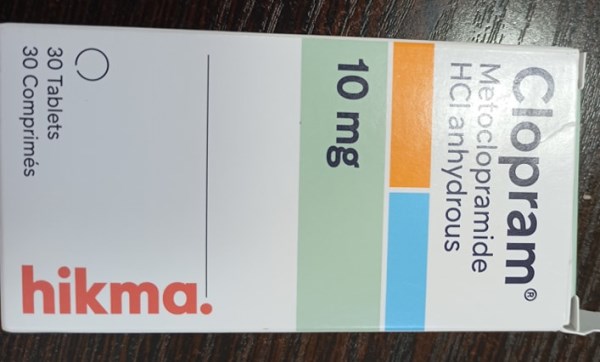
Clopram 10 mg Tablets
A comprehensive guide to Clopram tablets, used to treat nausea, vomiting, and gastrointestinal disorders.
Quick Facts
What is Clopram and what is it used for?
Clopram is a medication containing the active ingredient “metoclopramide,” which belongs to the dopamine antagonist group of drugs. The medication works by increasing the speed of movement in the stomach and upper intestines, which helps to empty food more quickly. It also works by blocking nausea signals in the brain from reaching the vomiting center, making it effective in controlling these symptoms.
- Treatment of Nausea and Vomiting: Used for the prevention and treatment of nausea and vomiting caused by chemotherapy, radiotherapy, or after surgery.
- Gastroparesis: Effective in treating cases of gastroparesis (delayed stomach emptying), especially in diabetic patients.
- Gastroesophageal Reflux: May be used as a short-term treatment for heartburn caused by GERD when other medications are not effective.
Clopram should be used as a short-term treatment only (not exceeding 5 days) to avoid the risk of serious side effects, and it is intended for use in adults.
How to Use and Dosage
You must follow your doctor’s instructions precisely when taking Clopram tablets. The usual dose for adults is one tablet (10 mg) up to three times daily. It is recommended to take the medication about 30 minutes before meals for best results.
- Usual Dose: One tablet (10 mg), 3 times daily.
- Time Interval: You must wait at least 6 hours between each dose to avoid the risk of overdose.
- Duration of Treatment: Treatment should not exceed 5 days to reduce the risk of neurological side effects.
The tablet should be swallowed whole with a glass of water. Do not crush or chew the tablet. Do not exceed the maximum recommended dose of 30 mg per day.
Potential Side Effects
Clopram may cause side effects, some of which are common and others rare but serious. It is important to know these symptoms and stop the medication immediately if any worrying signs appear.
- Very Common Symptoms: Feeling very drowsy.
- Common Symptoms: Fatigue, dizziness, low blood pressure, diarrhea, and feeling depressed.
- Serious Neurological Symptoms: Involuntary movements and spasms of the face and neck, muscle stiffness, abnormal eye movements, tremors.
If any abnormal movements appear, you must stop the medication immediately and see a doctor. Do not drive or operate heavy machinery after taking this drug due to its drowsy effect.
Contraindications and Warnings
The use of Clopram is strictly prohibited in certain situations to ensure patient safety. You must inform your doctor of your full medical history, including any other medications you are taking, before starting treatment.
- Children and Adolescents: It is contraindicated for those under 18 due to an increased risk of neurological side effects.
- Allergy: A previous allergy to metoclopramide.
- Gastrointestinal Problems: Cases of bleeding, obstruction, or perforation in the stomach or intestines.
- Other Medical Conditions: Epilepsy, pheochromocytoma, a history of involuntary muscle movements, or Parkinson’s disease.
The most important warning related to this drug is the risk of developing an irreversible movement disorder called “tardive dyskinesia,” especially with long-term use or in the elderly.
Frequently Asked Questions (FAQ)
1. Why should Clopram be taken before meals?
It is recommended to take Clopram about 30 minutes before eating to get the most benefit from its mechanism of action. The drug works by increasing stomach motility and accelerating its emptying. Taking it before a meal gives it enough time to start working, helping the stomach process food efficiently and preventing the feeling of nausea or fullness that can occur after eating.
This timing ensures the drug is at its peak effectiveness when you need it most, i.e., during and immediately after eating. Taking it on a relatively empty stomach may also improve its absorption and effectiveness.
2. What is the risk of using Clopram long-term?
The primary and most serious risk of long-term use (more than 3 months) is the development of a condition called “Tardive Dyskinesia.” It involves repetitive, involuntary movements, often of the face, tongue, and mouth (such as involuntary chewing or tongue protrusion). This condition can be permanent and irreversible even after stopping the drug.
This risk increases significantly with the duration of treatment and total dose, and it is more common in the elderly, especially women. For this reason, all health authorities recommend restricting the use of metoclopramide to just 5 days.
3. Can I drive after taking Clopram?
No, it is absolutely not recommended to drive or operate heavy machinery after taking Clopram. Severe drowsiness is the most common side effect of this drug, and it can significantly affect your concentration, slow your reaction time, and cause dizziness, making driving extremely dangerous.
You should avoid any activities that require full mental alertness until you know how the drug affects you. This effect is worsened if alcohol or other sedating drugs are taken at the same time. Your safety and the safety of others come first.
4. Is Clopram safe during pregnancy and breastfeeding?
Clopram should be used during pregnancy only if there is a clear medical need and the doctor decides that the benefits outweigh the potential risks. Although studies have not shown a strong link to birth defects, it should be used with caution. As for breastfeeding, the drug is secreted in breast milk, and due to the potential risk of side effects in the infant, its use is not recommended during lactation.
In general, a pregnant or breastfeeding woman should not take Clopram or any other medication without direct medical consultation. The doctor will assess the situation and choose the safest treatment for the mother and child.
5. What should I do if I miss a dose of Clopram?
If you forget to take a dose, take it as soon as you remember. However, if it is almost time for your next dose (e.g., less than two hours away), skip the missed dose completely and take the next one at its usual time. It is very important not to take a double dose to make up for a missed one.
Taking a double dose can significantly increase the risk of side effects, such as severe drowsiness or movement disorders. Since the interval between doses should be at least 6 hours, skipping the missed dose is the safest option if there isn’t enough time.
6. Why is Clopram contraindicated for patients with Parkinson’s disease?
Parkinson’s disease is a neurological disorder caused by a deficiency of dopamine in the brain. Medications for Parkinson’s (like levodopa) work by increasing dopamine levels or mimicking its effect. On the other hand, Clopram acts as a “dopamine antagonist,” meaning it blocks the action of dopamine in the brain.
Therefore, taking Clopram is completely contrary to the mechanism of Parkinson’s drugs, as they cancel each other out. More importantly, Clopram can significantly worsen the symptoms of Parkinson’s disease, such as tremors and muscle stiffness.
7. Can Clopram be used for motion sickness?
Although Clopram is effective against nausea and vomiting caused by gastrointestinal issues or chemotherapy, it is generally not considered effective for preventing or treating motion sickness. Motion sickness originates from a problem in the vestibular system of the inner ear, not the stomach.
There are other, more effective and specialized drugs for treating motion sickness, such as antihistamines (like dimenhydrinate) or scopolamine. You should consult a doctor or pharmacist to choose the appropriate medication for motion sickness.
8. Does Clopram affect the absorption of other drugs?
Yes, it can. Since Clopram speeds up the movement of food and drugs through the stomach to the intestines, it can alter the rate and amount of absorption of other orally administered drugs. It may decrease the absorption of some drugs that are absorbed in the stomach (like digoxin) and increase the absorption speed of drugs absorbed in the small intestine (like paracetamol).
This can affect the efficacy of other drugs or increase the risk of their side effects. For this reason, it is very important to tell your doctor or pharmacist about all the medications you are taking before starting Clopram.
9. What are the signs for immediately stopping Clopram?
You should stop taking Clopram immediately and contact your doctor if any serious signs appear. The most important is the appearance of any involuntary movements or spasms in the muscles of the face, jaw, neck, or limbs. This is a sign of an acute neurological side effect.
Other signs that warrant immediate discontinuation include: high fever with muscle rigidity, severe confusion or hallucinations, or symptoms of a severe allergic reaction such as swelling of the face and throat and difficulty breathing. These conditions require urgent medical attention.
10. Can I drink alcohol with Clopram?
No, you should completely avoid alcohol while using Clopram. Both Clopram and alcohol suppress the central nervous system and cause drowsiness and dizziness. Taking both together can greatly increase these effects, leading to severe drowsiness, poor coordination, and difficulty concentrating.
This combination significantly increases the risk of accidents and injuries. To ensure your safety, refrain from alcoholic beverages for the entire duration of treatment with this medication.
Disclaimer and Information Sources
- Content Purpose: The information in this guide is for awareness and educational purposes only and is not a substitute for professional medical advice. Do not use this or any other medication without consulting your doctor or pharmacist.
- Source of Information: This content was prepared based on official, documented medical sources appropriate for the topic (such as official drug leaflets, health ministry guidelines, FDA directives, or specialized medical organizations).
- Publication Date | Last Updated: September 21, 2025
Topics Related to Vomiting
- Vomiting: Causes and Treatment Methods.
- For Women Only: Causes of Vomiting and Nausea.
- Vomiting in Infants and Children.
- Pregnancy and Morning Sickness | Vomiting in Pregnancy ♀ Women’s Medical Encyclopedia.
- Anti-Vomiting or Anti-Reflux Infant Formulas.
Available Alternatives
The following is a list of medications available in Egyptian pharmacies, in the form of oral tablets, where each tablet contains 10 mg of metoclopramide. All brand names mentioned below are considered alternatives to one another. However, do not switch your medication on your own and always consult your doctor or pharmacist.
- Clopram 10mg Tablet. Produced by El Nasr Pharmaceutical Chemicals.
- Meclopram 10mg Tablet. Produced by Alexandria Co. for Pharmaceuticals.
- Plemazol 10mg Tablet. Produced by Cid Pharmaceuticals.
- Primperan 10mg Tablet. Produced by Sanofi International.
- Vomaway 10mg Tablet. Produced by Memphis Co. for Pharmaceuticals.

Dr. Ahmad Baker, PharmD
Senior Pharmacist & Health Educator
With over 23 years of clinical experience in hospital and community pharmacy across Egypt and Saudi Arabia, Dr. Ahmad specializes in reproductive health and pharmaceutical safety. He is dedicated to providing evidence-based guidance to empower patients in the MENA region.
Medical Disclaimer: This content is for educational purposes and reflects the latest pharmaceutical protocols. It is not a substitute for personal medical advice. Always consult Dr. Ahmad Baker or your healthcare provider before starting any treatment.