
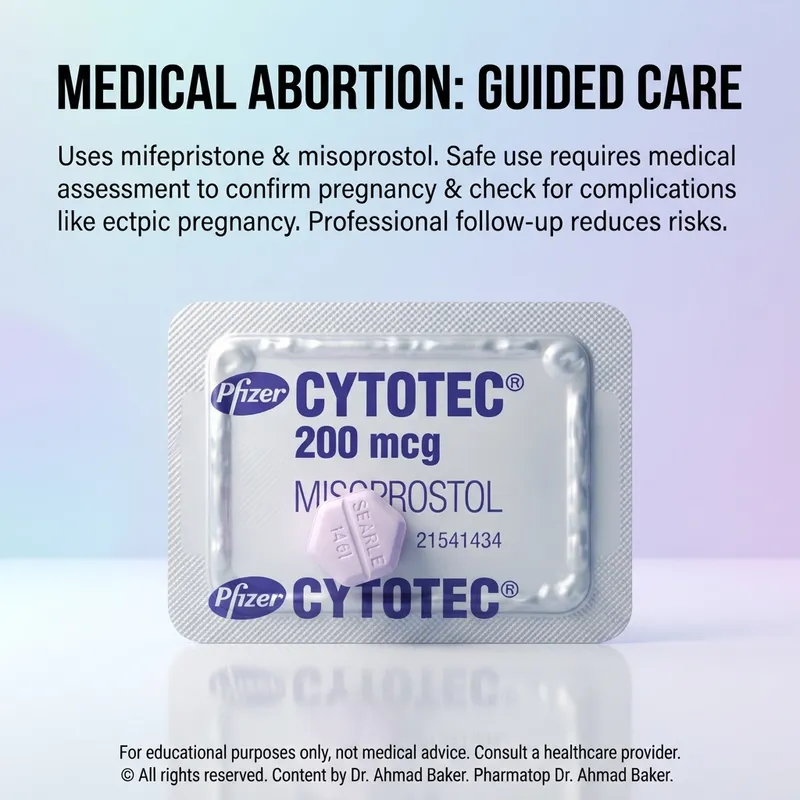
Can You Buy Abortion Pills Over the Counter at a Pharmacy? Clinical Dispensing Protocols, Ultrasound Prerequisites, and Self-Use Dangers
Medical abortion pharmacotherapy—relying on evidence-based regimens of mifepristone and misoprostol—represents a precisely calibrated therapeutic intervention rather than an over-the-counter retail product. While commercial preparations such as Cytotec, Misotac, or Mifeprex are recognized worldwide, health authorities strictly restrict direct over-the-counter sales. Safe administration demands definitive clinical evaluation, ultrasonic exclusion of ectopic gestation, accurate gestational age determination, and structured post-treatment follow-up to avert catastrophic complications such as tubal rupture, hemorrhage, or fatal sepsis.
📑 Table of Contents

Figure 1: Pharmacological dispensing of medical termination regimens requires rigorous diagnostic criteria and certified clinical supervision.
⚡ Clinical Quick Facts: Pharmacy-Dispensed Medical Abortion Regimens
| 📦 Generic & Brand Names | Mifepristone (Mifeprex, Korlym); Misoprostol (Cytotec, Misotac, Gymiso, Prostokos) |
| 🔬 Active Molecule(s) | Mifepristone (synthetic antiprogestational steroid) + Misoprostol (synthetic prostaglandin E1 analogue) |
| 💊 Dosage Form & Strength | Mifepristone 200 mg oral tablet; Misoprostol 200 mcg tablets (buccal, sublingual, or vaginal) |
| 🏭 Primary Manufacturers | Danco Laboratories, Pfizer, Piramal Healthcare, European/Middle Eastern regional generics |
| 🌍 Global Regulatory Status | Prescription Only (Rx) / REMS Restricted / Hospital Formulary Controlled (Never unrestricted OTC) |
| 📏 Standard Evidence-Based Regimen | Mifepristone 200 mg PO on Day 1, followed 24–48 hours later by Misoprostol 800 mcg buccally/sublingually |
| 📌 Prescription Required? | Strictly Yes (Requires certified prescriber, diagnostic confirmation, and therapeutic supervision) |
| 🏷️ Estimated Pharmacy Cost | Varies widely: $40 to $120 USD through legitimate subsidized healthcare clinics; black market runs $150–$400+ USD |
1. What are Pharmacy Abortion Pills?
A common misconception encountered in outpatient reproductive healthcare and community pharmacy practice is that pregnancy termination tablets can be purchased across the counter just like over-the-counter analgesics, antacids, or post-coital emergency contraceptives. Patients often ask pharmacists: “Can I just walk into a local pharmacy and purchase abortion pills without a prescription or clinical appointment?” From both a legal pharmacology perspective and a clinical safety standpoint, the answer is an absolute no.
Medication-induced pregnancy termination relies on specific molecules categorized as uterotonics, prostanoids, and progesterone-receptor antagonists. The clinical gold standard recognized by the World Health Organization (WHO) and the United States Food and Drug Administration (FDA) is a synchronized sequential combination of two distinct medications: mifepristone and misoprostol. In territories where mifepristone is legally restricted or unavailable, misoprostol-alone protocols are employed under specialized dosing structures.
It is critical to distinguish medical abortion pills from **emergency contraception** (commonly known as “morning-after pills,” such as levonorgestrel 1.5 mg [Plan B One-Step] or ulipristal acetate 30 mg [Ella]). Emergency contraceptives operate entirely before implantation occurs by delaying or inhibiting ovulation; they cannot disrupt, damage, or terminate an established, implanted pregnancy. Conversely, medical abortion agents act specifically upon established intrauterine implantations by detaching the gestational sac and triggering forceful, coordinated myometrial contractions to expel the contents of conception.
Because these medications alter uterine vascularity and stimulate intense smooth muscle contractions, regulatory bodies classify them under stringent dispensing controls. In most global jurisdictions—including the United States under the Mifepristone Risk Evaluation and Mitigation Strategies (REMS) program, European health directorates, and ministries of health throughout the Middle East and North Africa (MENA)—they are restricted to hospital networks, licensed obstetric facilities, or pharmacies certified to dispense them exclusively against specialized prescriptions. They are never unrestricted retail commodities.
2. Detailed Composition & Mechanism of Action
The high efficacy of modern medical abortion regimens (exceeding 95% to 98% complete abortion rate when administered within the first 63 to 70 days of amenorrhea) is driven by the molecular synergy between mifepristone and misoprostol. Each drug targets separate, sequential physiological pathways required to sustain pregnancy.

Figure 2: Sequential pharmacology of progesterone blockade followed by prostanoid-induced myometrial contractility.
| Active Molecule | Chemical & Molecular Class | Primary Physiological Mechanism |
|---|---|---|
| Mifepristone (RU-486) | • Synthetic 19-norsteroid derivative • Molecular Formula: C29H35NO2 • Potent competitive progesterone receptor antagonist (PRA) | Binds competitively to intracellular progesterone receptors with 2- to 10-fold higher affinity than endogenous progesterone. Blocks decidual progesterone support, causing decidual necrosis, syncytiotrophoblast detachment, falling human chorionic gonadotropin (beta-hCG) levels, and cervical ripening while sensitizing myometrium to prostaglandins. |
| Misoprostol | • Synthetic Prostaglandin E1 (PGE1) methyl ester analogue • Molecular Formula: C22H38O5 • Uterotonic and gastroprotective agent | Rapidly de-esterified into active misoprostol acid, which selectively binds to EP2 and EP3 prostanoid receptors on myometrial smooth muscle cells. Induces free calcium mobilization, triggering powerful, coordinated myometrial contractions and enzymatic dissolution of cervical collagen, expelling the gestational contents. |
Molecular Synergy: Why the Two-Step Regimen is Superior
During early gestation, the pregnant human uterus is in a state of profound “progesterone block.” High circulating progesterone suppresses the formation of gap junctions (connexin 43) between myometrial cells, maintains low intracellular resting calcium, and inhibits prostaglandin synthesis. This biological clamp keeps the uterine muscle relaxed, preventing premature pregnancy loss.
- Step 1 – Decidual Disruption: Mifepristone occupies the ligand-binding domain of progesterone receptors without initiating transcription. This blockade deprives the vascular maternal decidua of hormonal signaling, causing capillary degeneration, microvascular thrombosis, and detachment of the blastocyst. Additionally, mifepristone upregulates local expression of cyclooxygenase-2 (COX-2) and induces an exponential influx of gap junctions, transforming an unreactive myometrium into a hyper-responsive, excitable tissue primed for contractions.
- Step 2 – Uterine Evacuation: Administered 24 to 48 hours later, misoprostol acts directly upon the freshly sensitized prostanoid receptors. By triggering intracellular calcium efflux into the myometrial cytoplasm, it initiates strong, rhythmic contractions accompanied by enzymatic collagenolysis in the cervix. The cervix softens, shortens, and dilates, facilitating the rapid, complete passage of the non-viable gestational sac through the cervical canal.
3. Clinical Indications & Therapeutic Protocols
Medical abortion medications are not universal across all clinical stages. Their efficacy, pharmacokinetics, and safety profiles vary considerably based on the precise duration of pregnancy. Within institutional medicine, these medications serve clearly defined therapeutic indications:
- Early Medical Abortion (Up to 70 Days / 10 Weeks Gestation): Supported by robust clinical trial data from the American College of Obstetricians and Gynecologists (ACOG), the Society of Family Planning (SFP), and WHO. In this clinical window, outpatient medical termination achieves a success rate exceeding 95% without necessitating surgical intervention.
- Early Pregnancy Loss / Missed Abortion Management: Indicated for women experiencing an early embryonic demise (blighted ovum) or incomplete spontaneous miscarriage before 13 weeks. Administering mifepristone followed by misoprostol significantly increases complete uterine clearance rates (approximately 90%) compared to misoprostol alone, avoiding urgent surgical curettage.
- Post-10-Week / Second-Trimester Medical Induction: Protocols implemented beyond 70 days require adjusted dosing intervals, repetitive misoprostol administration, and mandatory in-hospital admission because the risks of severe hemorrhage, retained placenta, and hemodynamic instability increase substantially as gestational mass expands.
⚠️ Clinical Notice: Medical abortion protocols are strictly ineffective against ectopic pregnancies. Because mifepristone and misoprostol target uterine decidua and myometrium, they cannot terminate gestations growing within the fallopian tube, ovary, or abdomen. Taking these pills without diagnostic confirmation can dangerously mask a ruptured ectopic pregnancy.
💬 Need Direct Clinical Guidance on Reproductive Pharmacotherapy?
Connect with Dr. Ahmad Baker’s clinical team for confidential, evidence-based guidance aligned with international reproductive health protocols.
Get Medical Support Women’s Care Hub4. Dosage Regimens & Administration Guidelines
Modern medical abortion protocols have shifted away from older, high-dose regimens (which historically utilized 600 mg of mifepristone) to evidence-based, low-dose oral regimens that offer superior tolerability with equivalent clinical efficacy.
The Gold-Standard Regimen (Up to 70 Days Gestation)
- Day 1: Mifepristone 200 mg ingested orally as a single whole tablet with water. Most patients experience minimal immediate symptoms, though mild spotting or nausea can occasionally occur.
- Day 2 to 3 (24 to 48 Hours Later): Misoprostol 800 mcg (four 200 mcg tablets) administered via a non-oral transmucosal route:
- Buccal Administration: Two tablets placed between the cheek and lower gum on each side of the mouth for 30 minutes. Remaining fragments are swallowed with water.
- Sublingual Administration: Four tablets placed under the tongue for 30 minutes, followed by swallowing remaining fragments. This route produces the highest peak plasma concentration (Cmax), though it carries slightly higher rates of transient fever, chills, and nausea.
- Vaginal Administration: Four tablets inserted deeply into the posterior vaginal fornix. While highly effective, visible tablet fragments may linger for several hours.

Figure 3: Transvaginal ultrasonography remains the diagnostic benchmark to rule out ectopic gestation and accurately date gestational age.
Alternative Misoprostol-Only Protocol (When Mifepristone is Unavailable)
In clinical settings where mifepristone cannot be obtained, the WHO endorses an alternative misoprostol-only protocol:
- Dosage: 800 mcg misoprostol administered sublingually, buccally, or vaginally every 3 hours for a total of 3 consecutive doses (total cumulative dose: 2,400 mcg).
- Clinical Caveat: While effective (80% to 88% success rate), the misoprostol-only regimen exhibits lower complete abortion rates, a higher incidence of ongoing viable pregnancy requiring surgical intervention, and significantly more severe gastrointestinal adverse effects (intense cramping, profuse diarrhea, hyperpyrexia).
Post-Administration Monitoring & Expulsion Confirmation
Within 1 to 4 hours following misoprostol administration, patients typically experience progressive lower abdominal cramping accompanied by vaginal bleeding that surpasses a standard menstrual period, characterized by dark clots and gestational tissue expulsion. The heaviest bleeding and most intense cramping generally peak over a 2- to 6-hour window and then taper.
Confirmation of successful termination must never rely solely on subjective symptoms. Standard post-treatment follow-up requires either:
- A follow-up clinical ultrasonography 7 to 14 days post-treatment confirming the absence of an intrauterine gestational sac; or
- A standardized multi-level or quantitative serum beta-hCG test demonstrating a ≥ 80% drop in hormone levels over a 7-day span. Standard high-sensitivity urine pregnancy tests can remain persistently false-positive for 3 to 5 weeks due to residual circulating hCG clearance kinetics.
5. Adverse Drug Reactions & Contraindications
Distinguishing expected, self-limiting pharmacological side effects from acute, life-threatening toxicities is critical for safe patient care.
Expected Pharmacological Effects vs. Adverse Reactions
- Uterine Cramping & Hemorrhage (Expected): Heavy bleeding with clots is the direct therapeutic manifestation of successful uterine evacuation. Spotting typically persists for an average of 9 to 14 days post-expulsion.
- Gastrointestinal Distress (Very Common, >10%): Nausea, emesis, and watery diarrhea occur frequently following misoprostol administration due to systemic smooth muscle stimulation throughout the gastrointestinal tract.
- Thermoregulatory Shifts (Common, 10% to 30%): Transient shivering, rigors, and a temperature rise up to 38.0°C (100.4°F) can occur within the first 2 to 4 hours post-misoprostol, resolving spontaneously within 6 to 12 hours.
- Rare Complications (<1%): Hemorrhagic shock requiring blood transfusion, incomplete abortion with retained products of conception, pelvic inflammatory infection, endometritis, and lethal toxic shock syndrome caused by atypical bacterial proliferation (such as Clostridium sordellii or Streptococcus pyogenes).
Absolute and Relative Contraindications
- Confirmed or Suspected Ectopic Pregnancy: Absolute contraindication. Medical abortion tablets cannot treat an extrauterine pregnancy; failure to treat ectopic gestation can lead to tubal rupture and fatal intraperitoneal hemorrhage.
- Intrauterine Device (IUD) In Situ: The IUD must be extracted by a qualified clinician before initiating mifepristone or misoprostol to prevent severe uterine perforation or fulminant pelvic sepsis.
- Chronic Adrenal Failure & Long-Term Systemic Corticosteroid Therapy: Mifepristone exhibits potent antiglucocorticoid activity by binding to glucocorticoid receptors, which can trigger an acute adrenal crisis.
- Concurrent Anticoagulant Therapy or Inherited Coagulopathies: Marked bleeding risks make medical abortion unsafe; surgical uterine evacuation in an acute-care surgical suite is indicated.
- Inherited Porphyrias: Mifepristone can induce hepatic delta-aminolevulinic acid (ALA) synthase, precipitating acute neurovisceral porphyric crises.
- Previous Cesarean Delivery or Uterine Scarring (Special Caution): While not an absolute contraindication in early first-trimester regimens, a scarred uterus carries an increased risk of uterine rupture under aggressive or unmonitored misoprostol dosing.
🚨 Discontinue Immediately & Seek Urgent Emergency Care If:
- You soak completely through two or more maximal-absorbency maxi pads per hour for two consecutive hours (a sign of excessive uterine hemorrhage).
- You develop a persistent fever of 38.0°C (100.4°F) or higher that persists longer than 24 hours after taking misoprostol, or any fever that starts days after the bleeding has subsided.
- You experience severe, unremitting pelvic or abdominal pain that does not improve after taking maximum doses of ibuprofen (800 mg) and paracetamol.
- You notice foul-smelling, purulent vaginal discharge, severe pelvic tenderness, or general malaise with nausea and weakness without fever (potential atypical Clostridium sordellii septicemia).
- You experience sudden syncope, fainting, extreme dizziness, clammy pale skin, or severe tachycardia (signs of internal hypovolemic shock or ruptured tubal pregnancy).
- You have continuous, persistent bleeding that remains heavy for more than two straight weeks without tapering down.
- You experience zero bleeding or cramping within 24 hours of completing the misoprostol dose (potential regimen failure or undiagnosed ectopic pregnancy).
6. Drug Interactions & Dietary Precautions
The pharmacokinetics of both mifepristone and misoprostol can be significantly influenced by concurrent medications and dietary factors:
- Cytochrome P450 3A4 (CYP3A4) Modulators: Mifepristone is extensively metabolized in the liver by the CYP3A4 enzymatic pathway.
- CYP3A4 Inducers (e.g., Rifampin, Carbamazepine, Phenytoin, Phenobarbital, St. John’s Wort): Significantly decrease circulating mifepristone plasma concentrations, potentially lowering the success rate of the regimen.
- CYP3A4 Inhibitors (e.g., Ketoconazole, Itraconazole, Erythromycin, Grapefruit Juice): Inhibit mifepristone clearance, increasing serum concentrations and intensifying adverse effects. Avoid consuming large volumes of grapefruit juice during therapy.
- Non-Steroidal Anti-Inflammatory Drugs (NSAIDs – Ibuprofen, Naproxen): An outdated clinical misconception suggested that NSAIDs might negate the action of misoprostol by blocking prostaglandins. Rigorous clinical trials demonstrate that **ibuprofen is safe, highly effective, and the first-line analgesic of choice** for medical abortion pain management. It selectively blocks endogenous inflammatory prostaglandins without impairing misoprostol’s direct binding to myometrial EP2/EP3 receptors.
- Magnesium-Containing Antacids: Over-the-counter antacid preparations containing magnesium (e.g., magnesium hydroxide) exacerbate misoprostol-induced diarrhea. If an antacid is required for dyspepsia, an aluminum- or calcium-based preparation should be selected.
7. Special Populations & Clinical Considerations
Certain patient populations require focused clinical assessment before undergoing medical termination:
- Rhesus (RhD) Negative Individuals: Maternal-fetal hemorrhage during pregnancy termination can trigger maternal isoimmunization in RhD-negative patients exposed to RhD-positive fetal erythrocytes, potentially causing hemolytic disease of the fetus and newborn (HDFN) in subsequent gestations.
- Current clinical guidelines from the Society of Family Planning and WHO suggest that Rh testing and administration of Anti-D immune globulin (RhoGAM) may be optional below 10 to 12 weeks of gestation due to minimal feto-maternal red cell exchange. However, in institutional settings or beyond 10 weeks, Rh status verification and standard Anti-D immunoglobulin administration remains routine clinical practice.
- Lactating Individuals: Both mifepristone and misoprostol are excreted into human breast milk in small amounts. Misoprostol reaches peak milk concentrations rapidly and clears within 4 to 6 hours. Current clinical consensus from the Academy of Breastfeeding Medicine supports continuing breastfeeding without interruption, or pumping and discarding milk for 4 to 6 hours post-misoprostol if infant gastrointestinal looseness is a concern.
- Adolescents: Medical abortion regimens show equivalent efficacy and safety in adolescents compared to adult cohorts. Dosing protocols do not require weight-based adjustments. However, emotional support and early clinical follow-up are particularly important in this age group.
- Patients with a Uterine Scar: A history of prior cesarean delivery or conservative myomectomy requires careful clinical assessment. While first-trimester medical abortion does not carry a clinically elevated risk of uterine rupture compared to unscarred uteri, high-dose misoprostol protocols in the late second trimester demand structured inpatient monitoring.
8. Generic Equivalents & Therapeutic Alternatives
In clinical reproductive healthcare, patients may encounter different brand names, generic equivalents, or procedural alternatives:
| Method / Modality | Primary Mechanism | Complete Efficacy Rate | Gestational Window | Clinical Setting & Procedure Time |
|---|---|---|---|---|
| Combined Medical Regimen (Mifepristone + Misoprostol) | Receptor blockade followed by uterine contractions | 95% – 98% | Up to 70 days (10 weeks) | Outpatient self-administration at home; takes 24–48 hours total |
| Misoprostol-Only Regimen (Repeated Doses) | Repeated prostanoid myometrial contractions | 80% – 88% | Up to 70 days | Outpatient; takes 8–12 hours of repeated dosing; higher cramping/nausea |
| Manual Vacuum Aspiration (MVA) (Surgical Alternative) | Gentle manual mechanical suction using handheld aspirator | 98% – 99% | Up to 12–14 weeks | Outpatient clinical office; takes 5–10 minutes under local paracervical block |
| Electric Vacuum Aspiration / D&C (Surgical Alternative) | Electric suction curettage | 99% | First & second trimester | Surgical operating room or ambulatory center; requires conscious sedation or general anesthesia |
💬 Unsure Which Protocol Aligns with Your Clinical Parameters?
Every patient’s reproductive health history is unique. Consult directly with our clinical pharmacy specialists to evaluate your options safely.
Request Confidential Support Protocol Silo9. Regional Availability & Authentication Guide
Access to medical abortion tablets varies significantly across global regions due to differing legal frameworks, distribution controls, and regulatory requirements:
- United States & Western Europe: In the US, mifepristone is regulated under an FDA Risk Evaluation and Mitigation Strategy (REMS). Following recent regulatory updates, certified retail and mail-order pharmacies can dispense the drug directly against a certified prescriber’s order. In the UK and many European nations, medications are provided through National Health Service (NHS) family planning clinics or regulated telemedicine programs.
- Middle East & North Africa (MENA / GCC): Across countries such as Egypt, Saudi Arabia, the UAE, and Kuwait, mifepristone is generally unapproved or unavailable for commercial dispensing. Misoprostol (Cytotec, Misotac) is registered strictly as an in-hospital uterotonic or for specific inpatient gastrointestinal/obstetric indications. It is listed as a strictly controlled hospital formulary agent and cannot be legally sold or dispensed across the counter in community pharmacies.

Figure 4: The global black market exposes patients to counterfeit pills, expired formulations, and inaccurate dosing information.
The Dangers of Black-Market Counterfeit Sourcing
Because commercial pharmacy access is tightly controlled, an unregulated black market operates across social media platforms, classified sites, and unlicensed sellers. Clinical pharmacists forcefully alert patients against using these illicit sources due to grave medical hazards:
- Degraded Active Pharmaceutical Ingredient (API): Misoprostol is a highly hygroscopic molecule that is chemically unstable in ambient humidity. Authentic misoprostol must be hermetically sealed in specialized double-aluminum blister packs. Illicit sellers frequently repackage tablets in plastic baggies, leading to rapid hydrolysis into inactive degradation products. The user ends up taking an ineffective compound, resulting in incomplete abortion, heavy bleeding, and severe infection.
- Counterfeit Tablets: Forensic analyses of seized black-market “Cytotec” tablets regularly reveal chalk, starch, heavy metals, or unrelated pharmaceuticals with zero active prostaglandin content.
- Inaccurate Dosing Instructions: Unlicensed black-market dealers often advise dangerous dosing schedules—such as inserting tablets into the cervix or taking massive overdoses—that can lead to uterine rupture, hemorrhage, or systemic toxicity.
Proper Storage Parameters for Authentic Medications
- Store tablets in their original, sealed aluminum blister packaging at controlled room temperature between 20°C to 25°C (68°F to 77°F).
- Protect the blister packs from direct moisture, humidity, and excessive heat. Do not remove tablets from their foil blister until immediately prior to administration.
10. Clinical Pharmacist Verdict & Bottom Line
⚖️ Clinical Evaluation: Self-Administered vs. Clinically Supervised Protocols
Why Supervised Medical Abortion is Highly Safe and Effective:
- Unmatched Clinical Efficacy: The gold-standard mifepristone + misoprostol regimen achieves complete uterine evacuation in 95% to 98% of cases below 10 weeks of gestation.
- Non-Invasive Nature: Avoids procedural risks associated with surgical instrumentation, such as mechanical cervical laceration or uterine perforation.
- Privacy and Patient Autonomy: Allows patients to complete the biological process in the privacy and comfort of their own home environment.
Critical Dangers of Unmonitored, Over-the-Counter Self-Use:
- Risk of Undiagnosed Ectopic Pregnancy: Taking abortion pills without an ultrasound cannot terminate a tubal gestation and can mask signs of a life-threatening internal rupture.
- Hemorrhagic and Septic Risks: Lacking clinical guidance leaves patients unable to differentiate expected bleeding from acute hemorrhage or early bacterial sepsis.
- Risk of Counterfeit Exposure: Sourcing pills outside legitimate, regulated pharmacy systems exposes patients to degraded, ineffective, or contaminated products.
The Clinical Bottom Line: Abortion pills are powerful, lifesaving medical agents when used within validated clinical protocols, but they are **not safe for casual, unmonitored over-the-counter self-administration**. Patients seeking to safely end an early pregnancy should first obtain an ultrasound to confirm intrauterine location and accurate dating, and obtain authentic medications through certified, legal healthcare channels with access to professional follow-up care.
❓ Frequently Asked Clinical Questions
❓ Can I walk into a commercial pharmacy and buy abortion pills without a prescription?
No. Commercial pharmacies worldwide are legally and clinically prohibited from dispensing medical abortion tablets (mifepristone and misoprostol) as over-the-counter products. In countries where these medications are legally approved, they require a formal prescription from a certified medical provider; in many other countries, their distribution is restricted exclusively to hospital formularies.
❓ Why does the pharmacist refuse to dispense Cytotec (misoprostol) without a specialized prescription?
Pharmacists are bound by strict legal regulations and clinical ethics. Misoprostol induces forceful uterine contractions. Dispensing it without diagnostic verification (such as an ultrasound confirming an intrauterine pregnancy) exposes the patient to life-threatening risks, including undetected tubal rupture from an ectopic pregnancy, hemorrhagic shock, or uterine rupture.
❓ Why is an ultrasound considered a critical step prior to medical abortion?
An ultrasound serves two non-negotiable diagnostic purposes: first, it confirms that the gestational sac is implanted inside the uterine cavity (ruling out an ectopic pregnancy in the fallopian tubes); second, it accurately dates the pregnancy down to the day. The efficacy and safety of medical abortion protocols decrease sharply as gestational age advances past 10 weeks (70 days).
❓ What happens if a patient takes abortion pills while having an ectopic pregnancy?
Abortion pills have zero therapeutic effect on an ectopic pregnancy. Mifepristone and misoprostol act specifically on the uterine decidua and myometrium, not the fallopian tube. Taking them can cause vaginal bleeding that falsely suggests a successful termination, delaying care until the fallopian tube ruptures, which causes massive, life-threatening internal abdominal bleeding.
❓ Can medication abortion fail, and what is done if it does?
Yes. The combined mifepristone-misoprostol regimen has an expected failure rate of approximately 2% to 5%, manifesting as an incomplete abortion (retained tissue) or an ongoing viable pregnancy. When a failure occurs, patients require clinical evaluation and treatment via repeat misoprostol dosing or procedural aspiration (Manual Vacuum Aspiration – MVA) to clear the uterus and prevent severe infection.
❓ Is it safe to take abortion pills if I had a previous cesarean section delivery?
In early first-trimester pregnancies (under 10 weeks), clinical evidence indicates that medical abortion regimens are generally safe for individuals with a prior low transverse cesarean scar. However, unmonitored self-administration or excessive, erratic misoprostol dosing creates intense, uncoordinated contractions that carry a potential risk of uterine rupture along the previous scar line.
❓ Why is maternal blood type and Rh factor testing required?
If a pregnant individual is Rh-negative and the pregnancy is exposed to Rh-positive fetal blood cells during uterine bleeding, maternal antibodies can develop (Rh isoimmunization). These antibodies can cross the placenta in future pregnancies and destroy fetal red blood cells, causing severe fetal anemia or death. Administering Anti-D immune globulin (RhoGAM) prevents this sensitization.
❓ What are the clinical signs of excessive bleeding requiring emergency hospital care?
The international clinical guideline is the “two-pad rule”: if vaginal bleeding completely soaks through two or more maximum-absorbency menstrual pads per hour for two consecutive hours, or if you pass blood clots larger than a lemon accompanied by lightheadedness, weakness, or fainting, you must go to an emergency department immediately for evaluation.
❓ Can medical abortion pills be safely purchased from sellers on social media or online messaging apps?
No. Purchasing medications from unregulated online vendors, social media sellers, or chat groups is dangerous. Chemical testing of these illicit products frequently reveals degraded or inactive misoprostol (which deteriorates rapidly when unsealed), incorrect dosages, heavy metal contamination, or counterfeit ingredients, alongside dangerous dosing instructions that put patient lives at risk.
❓ How long after a medical abortion will a home pregnancy test turn negative?
Human chorionic gonadotropin (beta-hCG) clears gradually from maternal circulation after a pregnancy ends. Standard home urine pregnancy tests are highly sensitive and will often continue to display a positive result for 3 to 5 weeks following a successful complete abortion. Verifying treatment success should be done via medical ultrasound or serial quantitative serum beta-hCG blood tests.
⚠️ Medical Disclaimer
The clinical information on Pharma Guide is intended strictly for educational and informational purposes. It does not constitute personal medical diagnosis or individualized prescription advice. Never initiate, adjust, or terminate pharmacotherapy without direct clinical supervision from your physician or consulting Dr. Ahmad Baker. For full legal and clinical policies, consult our Medical Disclaimer and Editorial Policy.
📚 Explore Related Guides on Pharma Guide
© 2026 Pharma Guide – Clinical Drug Index & Reproductive Health.
Led by Dr. Ahmad Baker | Privacy Policy | Medical Disclaimer | Contact Us

Dr. Ahmad Baker, PharmD
Senior Pharmacist & Health Educator
With over 23 years of clinical experience in hospital and community pharmacy across Egypt and Saudi Arabia, Dr. Ahmad specializes in reproductive health and pharmaceutical safety. He is dedicated to providing evidence-based guidance to empower patients in the MENA region.
Medical Disclaimer: This content is for educational purposes and reflects the latest pharmaceutical protocols. It is not a substitute for personal medical advice. Always consult Dr. Ahmad Baker or your healthcare provider before starting any treatment.